- Plants
- ›Vascular Plants
- ›flowering plants
- ›Dicots
- ›Gentians, Dogbanes, Madders, and Allies
- ›Dogbane Family
- ›milkweeds
- ›Ceropegieae
- ›Stapeliads
- ›Hoodia
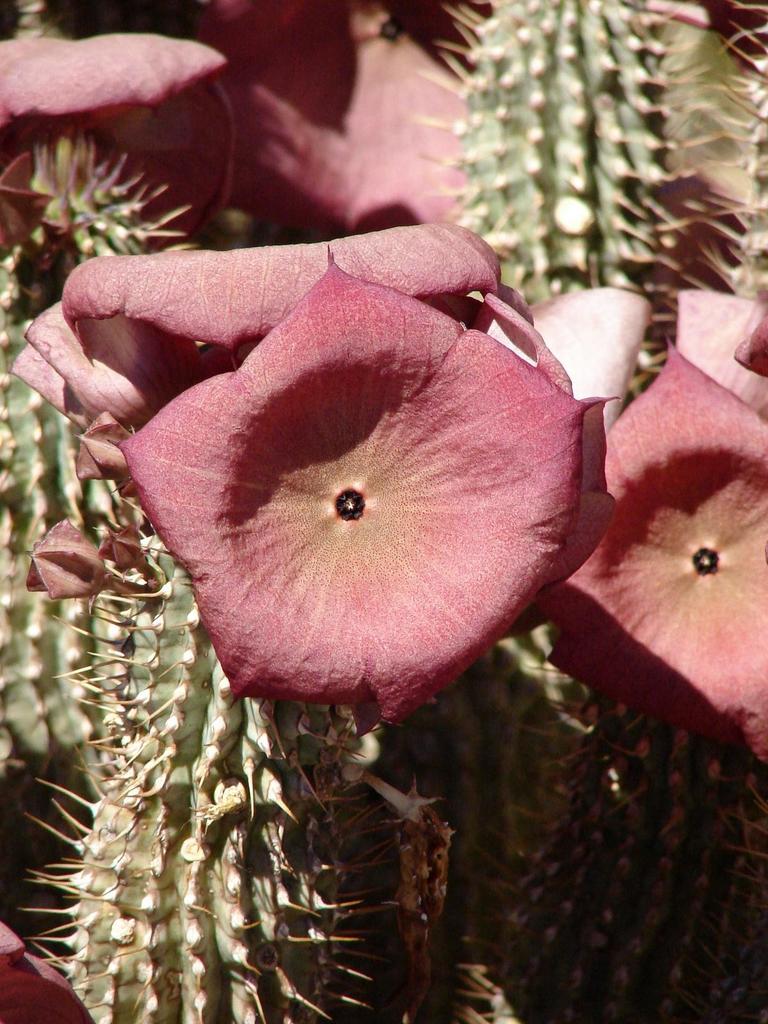
Wild Ghaap
Hoodia gordonii
Hoodia gordonii, also known as Bushman's hat, is a leafless spiny succulent plant claimed to have therapeutic properties in folk medicine. It grows naturally in Botswana, South Africa and Namibia. The species became internationally known and threatened by collectors, after a marketing campaign falsely claimed that it was an appetite suppressant for weight loss. The flowers smell like rotten meat and are pollinated mainly by flies. The indigenous San people of the Namib desert call this plant ǁhoba (pronounced [kǁʰɔbɑ] – the initial sound is a lateral click).
From the article Hoodia gordonii on Wikipedia (CC BY-SA), quoted section by section
Description
Hoodia gordonii is a clump-forming perennial succulent plant growing to around 1 metre tall, with up to 50 grey-green ribbed and spined stems in a clump. The flowers are up to 7.5 cm diameter; they have a five-lobed corolla, but appear circular after opening as the lobes curl back behind the flowers; they vary from pale straw-yellow to pink to dark reddish-purple. The flowers smell of rotting meat, and are pollinated by flies attracted to the smell. The fruit is a two-horned capsule, which splits open when mature to release the seeds. The seeds have a fluffy pappus and are wind-dispersed.
Where it lives
Recorded sightings
—
geo-referenced records in GBIF, from museums, herbaria and field observers.
Drag the globe to turn it. Dots are where records exist, not a range map; darker means more records.
In the stacks
Searching the stacks…
Every page naming Hoodia gordonii in the Biodiversity Heritage Library →
This page is assembled live from iNaturalist, GBIF, Wikipedia, the Source Library and the Internet Archive. It is not yet part of the hand-edited codex. iNaturalist taxon 489647.