Hydrozoans
Hydrozoa
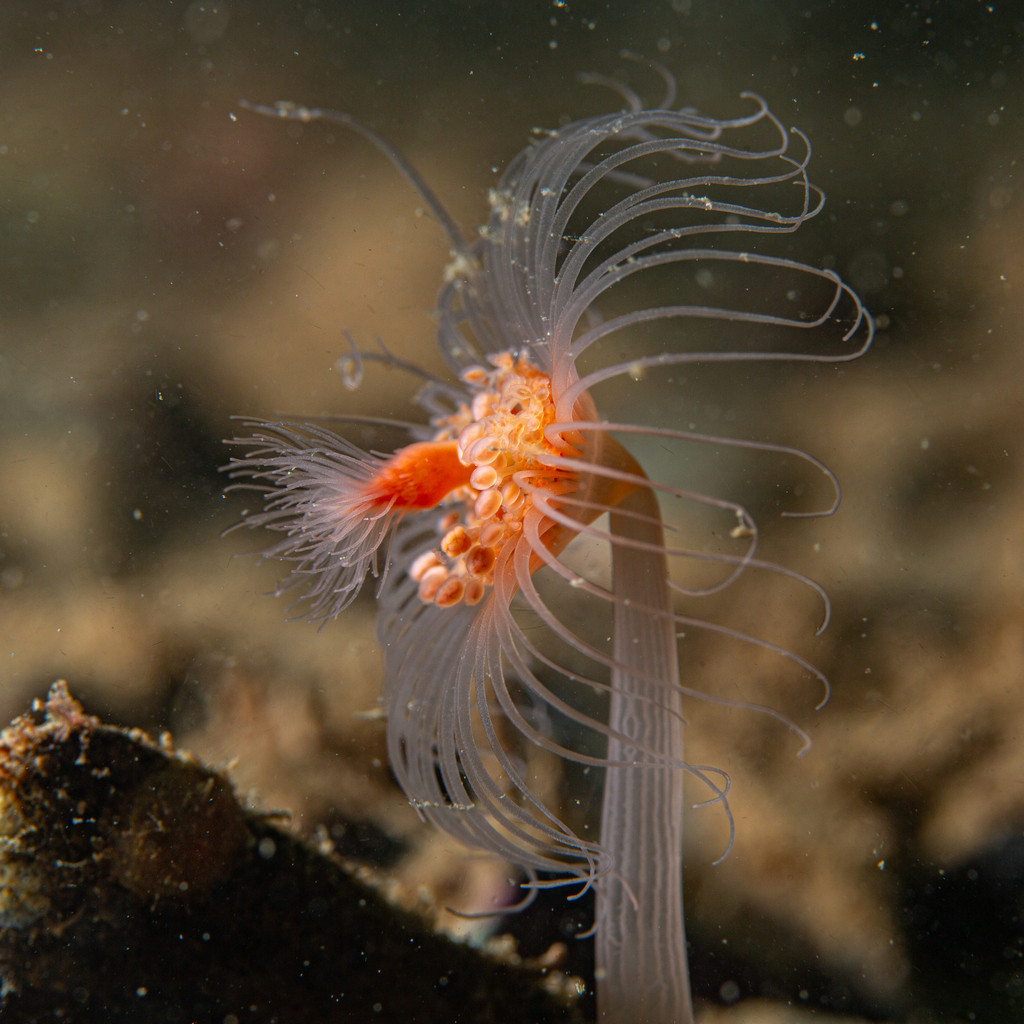
Hydrozoa (hydrozoans; from Ancient Greek ὕδωρ (húdōr) 'water' and ζώα (zóa) 'animals'), also called hydroids, are a taxonomic class of individually very small, predatory animals, some solitary and some colonial, most of which inhabit saline water. The colonies of the colonial species can be large, and in some cases the specialized individual animals cannot survive outside the colony. A few genera within this class live in freshwater habitats. Hydrozoans are related to jellyfish and corals, which also belong to the phylum Cnidaria.
Some examples of hydrozoans are the freshwater jelly (Craspedacusta sowerbii), freshwater polyps (Hydra), Obelia, Portuguese man o' war (Physalia physalis), chondrophores (Porpitidae), and pink-hearted hydroids (Tubularia).
2 branches of this class, most-observed first
See this branch on the Wheel of Life →
Where it lives
Recorded sightings
—
geo-referenced records in GBIF, from museums, herbaria and field observers.
Drag the globe to turn it. Dots are where records exist, not a range map; darker means more records.
In the stacks
Searching the stacks…
Every page naming Hydrozoa in the Biodiversity Heritage Library →
This page is assembled live from iNaturalist, GBIF, Wikipedia, the Source Library and the Internet Archive. It is not yet part of the hand-edited codex. iNaturalist taxon 48921.