- Plants
- ›Vascular Plants
- ›flowering plants
- ›Dicots
- ›Heathers, Balsams, Primroses, and Allies
- ›camellia family
- ›Camellia
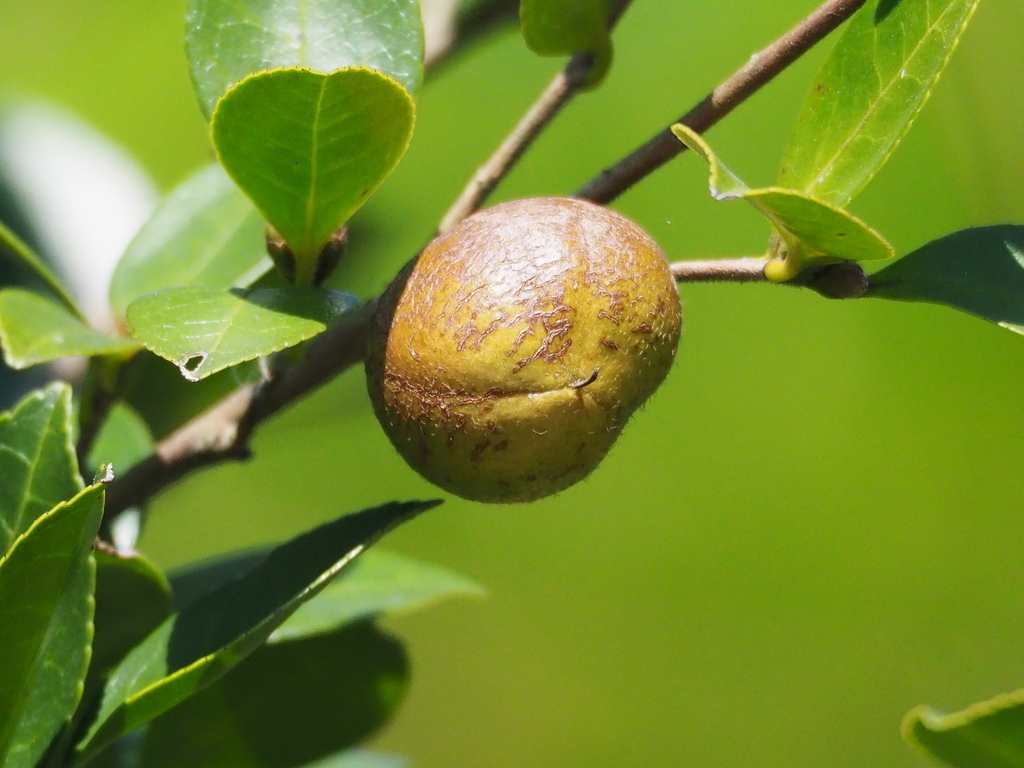
Tea-oil Camellia
Camellia oleifera
Camellia oleifera, which originated in China, is notable as an important source of edible oil (known as tea oil or camellia oil) obtained from its seeds. It is commonly known as the oil-seed camellia or tea oil camellia, though to a lesser extent other species of camellia are used in oil production too.
It is widely distributed in China and is cultivated extensively there. It is found in forests, thickets, banks of streams and foothills at elevations of 500 to 1,300 metres.
From the article Camellia oleifera on Wikipedia (CC BY-SA), quoted section by section
At the table
The seeds of Camellia oleifera can be pressed to yield tea seed oil, a sweetish seasoning and cooking oil. In tea seed oil, oleic acid, a monounsaturated fatty acid comprises ~80% of the total fatty acid content - the oil is similar in composition to olive oil. After the tea seed oil is extracted, the seed itself still serves a purpose. The Camellia oil cake is used as an anti-inflammatory and antioxidant. Tea oil is also known as "tea seed oil" when sold as cooking oil in supermarkets throughout Australia, New Zealand and the United States. It can also be used in textile manufacture, in soap making and, when burned in an oil lamp, as a source of light. Camellia oil is also traditionally used to protect Japanese woodworking tools and cutlery from corrosion and is currently sold for that purpose.
Wikipedia: “Uses”
Where it lives
Recorded sightings
—
geo-referenced records in GBIF, from museums, herbaria and field observers.
Drag the globe to turn it. Dots are where records exist, not a range map; darker means more records.
In the stacks
Searching the stacks…
Every page naming Camellia oleifera in the Biodiversity Heritage Library →
This page is assembled live from iNaturalist, GBIF, Wikipedia, the Source Library and the Internet Archive. It is not yet part of the hand-edited codex. iNaturalist taxon 487657.