- Plants
- ›Vascular Plants
- ›flowering plants
- ›Dicots
- ›Buttercups, Poppies, and Allies
- ›barberry family
- ›Nandinoideae
- ›Leonticeae
- ›Gymnospermium
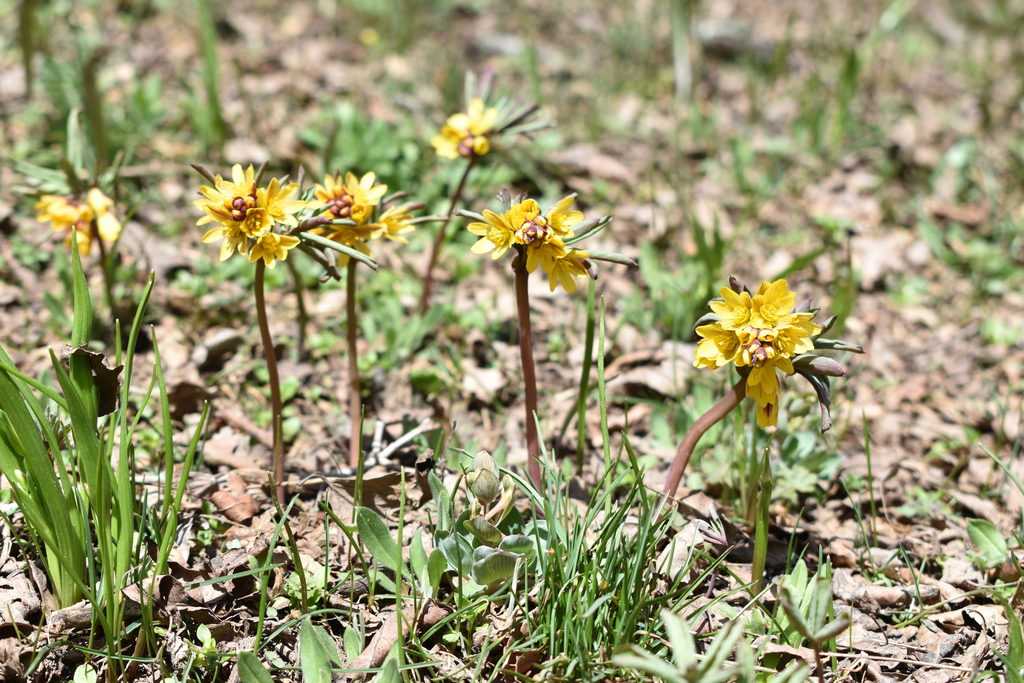
Gymnospermium alberti
Gymnospermium albertii (syn. Leontice alberti) is a species in the genus Gymnospermium in the family Berberidaceae.
From the article Gymnospermium albertii on Wikipedia (CC BY-SA), quoted section by section
Description
Tuberous perennial.
Height: Flowering stems to about 15 cm high. Leaves: Lobed, with five leaflets. Leaves are bronze-tinged and rolled lengthways when young, expanding and turning pale green with maturity. Inflorescences: Raceme: Pendent at first, later becoming upright. Densely flowered. Flowers: Each flower measures up to 2.5 cm (1 in) in diameter when fully open, but they are more frequently seen in the earlier bell-shaped stage of openness. Flowers are bright yellow with a coppery red exterior.
Range & habitat
It is native to rocky hillsides in Central Asia (Uzbekistan, Tajikistan, Turkmenistan, and Kazakhstan).
Wikipedia: “Range”
How it is grown
Easily raised from seed. Very hardy. Successful in open, well-drained soil. Grows well in unheated glasshouses.
Wikipedia: “Cultivation”
In human culture
Gymnospermium derived from Greek, meaning 'naked seed'. Albertii is named for Johann Albert Von Regel, collector of the type specimen and son of the author of the species, Eduard August von Regel.
Wikipedia: “Etymology”
Where it lives
Recorded sightings
—
geo-referenced records in GBIF, from museums, herbaria and field observers.
Drag the globe to turn it. Dots are where records exist, not a range map; darker means more records.
In the stacks
Searching the stacks…
Every page naming Gymnospermium alberti in the Biodiversity Heritage Library →
This page is assembled live from iNaturalist, GBIF, Wikipedia, the Source Library and the Internet Archive. It is not yet part of the hand-edited codex. iNaturalist taxon 482875.