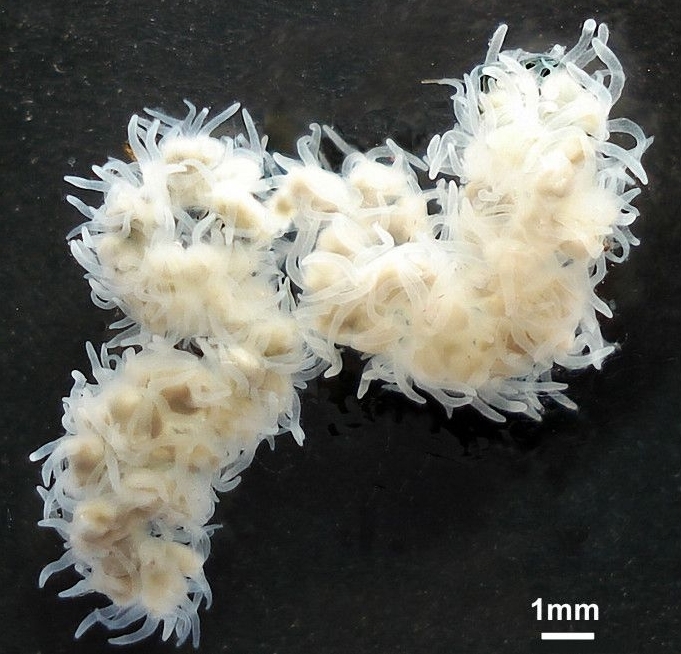
Polypodium hydriforme
Polypodium hydriforme is a species of Cnidarian that parasitizes in the eggs of sturgeon and similar fishes (Acipenseridae and Polyodontidae). It is one of few animals that lives inside the cells of other animals. P. hydriforme is the only species in the class Polypodiozoa.
From the article Polypodium hydriforme on Wikipedia (CC BY-SA), quoted section by section
Description
Polypodium was discovered in 1871 by M.M. Owsiannikov within the eggs of sterlet (Acipenser ruthenus) from the Volga river in Russia. In 1885, Ussov named the species Polypodium hydriforme and gave a morphological description of the parasite. Polypodium was long considered a unique intracellular parasite among cnidarians. Its hosts include 14 species of Acipenser, two species of Huso, the American paddlefish, and the shovelnose sturgeon. Polypodium hydriforme is an endocellular parasite with an unusual life cycle, a peculiar morphology, and high rates of DNA evolution. Polypodium spends most of its life inside the oocytes of acipenseriform fishes. In infected oocytes, Polypodium develops from a binucleate cell into an inside-out planuliform larva and then into an elongate inside-out stolon; the epidermal cell layer is located internal to the body and the gastrodermis is located externally. The embryo, larva and stolon are surrounded by a protective polyploid cell, which also functions in digestion. Just prior to host spawning, Polypodium everts to the normal position of cell layers, revealing tentacles scattered along the stolon. During eversion, the yolk of the host oocyte fills the gastral cavities of the parasite, supplying the future free-living stage with nutrients. The parasitic phase of its life cycle usually takes several years. …
Wikipedia: “Description and life cycle”
Range & habitat
The habitat of Polypodium hydriforme is freshwater. Although freshwater is an unusual habitat for cnidarians, it is not unheard of, especially within hydrozoans. For instance, the model organism Hydra and the jellyfish Craspedacusta sowerbii are both exclusively freshwater hydrozoans. Hydra and Craspedacusta sowerbii are not closely related to Polypodium. Also, the obligate parasite Myxobolus cerebralis lives in freshwater. Thus, it appears that in the evolution of cnidarians, invasion of freshwater habitats has happened at least three separate times.
Wikipedia: “Habitat”
Where it lives
Recorded sightings
—
geo-referenced records in GBIF, from museums, herbaria and field observers.
Drag the globe to turn it. Dots are where records exist, not a range map; darker means more records.
In the stacks
Searching the stacks…
Every page naming Polypodium hydriforme in the Biodiversity Heritage Library →
This page is assembled live from iNaturalist, GBIF, Wikipedia, the Source Library and the Internet Archive. It is not yet part of the hand-edited codex. iNaturalist taxon 474019.