- Plants
- ›Vascular Plants
- ›flowering plants
- ›Dicots
- ›beeches, oaks, walnuts, and allies
- ›Southern Beeches
- ›Nothofagus
- ›Nothofagus
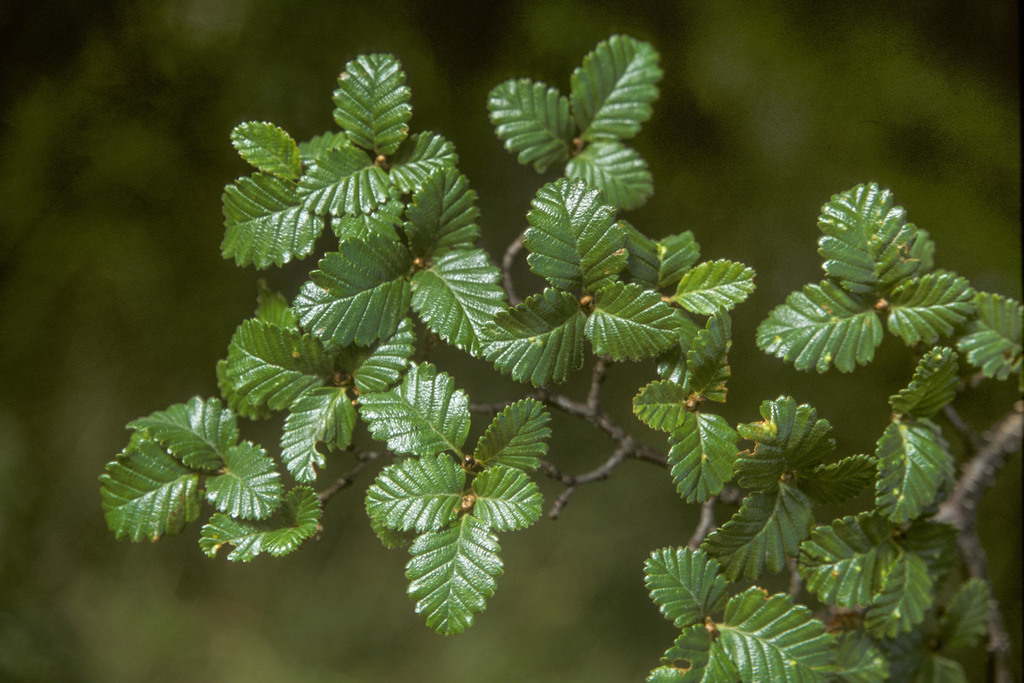
Lenga Beech
Nothofagus pumilio
Nothofagus pumilio, the lenga beech (from the Mapuche language), is a deciduous tree or shrub in the Nothofagaceae family that is native to the southern Andes range, in the temperate forests of Chile and Argentina to Tierra del Fuego, from 35° to 56° South latitude. This tree is in the same genus as the coihue. It regenerates easily after fires. The wood is of good quality, moderate durability, and is easy to work with. It is used in furniture, shingles and construction and sometimes as a substitute for American black cherry in the manufacturing of cabinets.
From the article Nothofagus pumilio on Wikipedia (CC BY-SA), quoted section by section
Description
The lenga beech can reach heights of up to 35 m (115 ft) and a trunk diameter of up to 1.7 m (5.6 ft). In southern Patagonia it grows to a height of up to 30 m (100 ft), and attains a trunk diameter of 1.5 m (4.9 ft). In more northern regions it grows only at heights above 1000 meters (3300 ft) in the form of a shrub. The leaves are dark green, elliptic toothed and 2–4 cm long, with irregularly lobed margins, and turn to yellow and reddish tones in autumn. The fruit is a small nut 4–7 mm long.
Where it lives
Recorded sightings
—
geo-referenced records in GBIF, from museums, herbaria and field observers.
Drag the globe to turn it. Dots are where records exist, not a range map; darker means more records.
In the stacks
Searching the stacks…
Every page naming Nothofagus pumilio in the Biodiversity Heritage Library →
This page is assembled live from iNaturalist, GBIF, Wikipedia, the Source Library and the Internet Archive. It is not yet part of the hand-edited codex. iNaturalist taxon 465366.