- Animals
- ›Chordates
- ›Vertebrates
- ›Mammals
- ›Therians
- ›Placental Mammals
- ›Primates, Rodents, and Allies
- ›Rodents
- ›Squirrels, Dormice, and Mountain Beavers
- ›Squirrels
- ›Ground and African Tree Squirrels
- ›Holarctic Ground Squirrels

Prairie Dogs
Cynomys
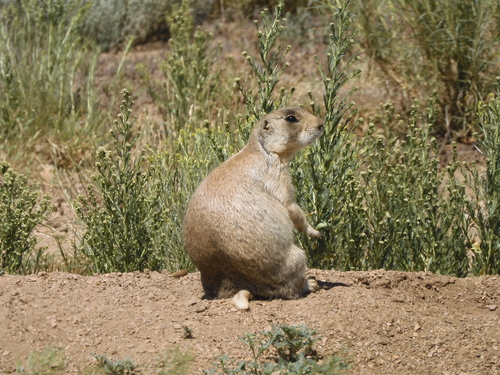
Prairie dogs (genus Cynomys) are herbivorous burrowing ground squirrels native to the grasslands of North America. There are five recognized species of prairie dog: black-tailed, white-tailed, Gunnison's, Utah, and Mexican prairie dogs. In Mexico, prairie dogs are found primarily in the northern states, which lie at the southern end of the Great Plains: northeastern Sonora, north and northeastern Chihuahua, northern Coahuila, northern Nuevo León, and northern Tamaulipas. In the United States, they range primarily to the west of the Mississippi River, though they have also been introduced in a few eastern locales. They are also found in the Canadian Prairies. Despite the name, they are not actually canines; prairie dogs, along with the marmots, chipmunks, and several other basal genera belong to the ground squirrels (tribe Marmotini), part of the larger squirrel family (Sciuridae).
Prairie dogs are considered a keystone species, with their mounds often being used by other species. Their mound-building encourages grass development and renewal of topsoil, with rich mineral and nutrient renewal in the soil, which can be crucial for soil quality and agriculture. They are extremely important in the food chain, being important to diets of many animals such as the black-footed ferret, swift fox, golden eagle, bald eagle, red tailed hawk, peregrine falcon, American badger, and coyote. Other species, such as the golden-mantled ground squirrel, mountain plover, and the burrowing owl, also rely on prairie dog burrows for nesting areas.
2 branches of this genus, most-observed first · about 5 known species
See this branch on the Wheel of Life →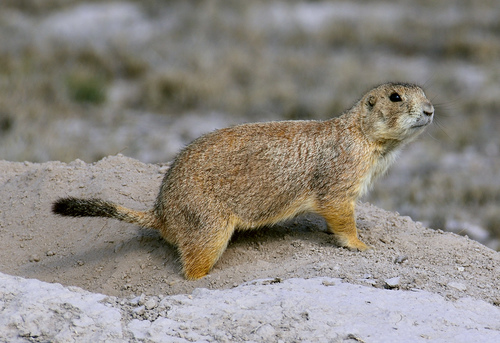
Where it lives
Recorded sightings
—
geo-referenced records in GBIF, from museums, herbaria and field observers.
Drag the globe to turn it. Dots are where records exist, not a range map; darker means more records.
In the stacks
Searching the stacks…
Every page naming Cynomys in the Biodiversity Heritage Library →
This page is assembled live from iNaturalist, GBIF, Wikipedia, the Source Library and the Internet Archive. It is not yet part of the hand-edited codex. iNaturalist taxon 46175.