- Animals
- ›Chordates
- ›Vertebrates
- ›Mammals
- ›Therians
- ›Placental Mammals
- ›Primates, Rodents, and Allies
- ›Rodents
- ›Squirrels, Dormice, and Mountain Beavers
- ›Squirrels
- ›Beautiful and Palm Squirrels
- ›Beautiful Squirrels
- ›Callosciurus
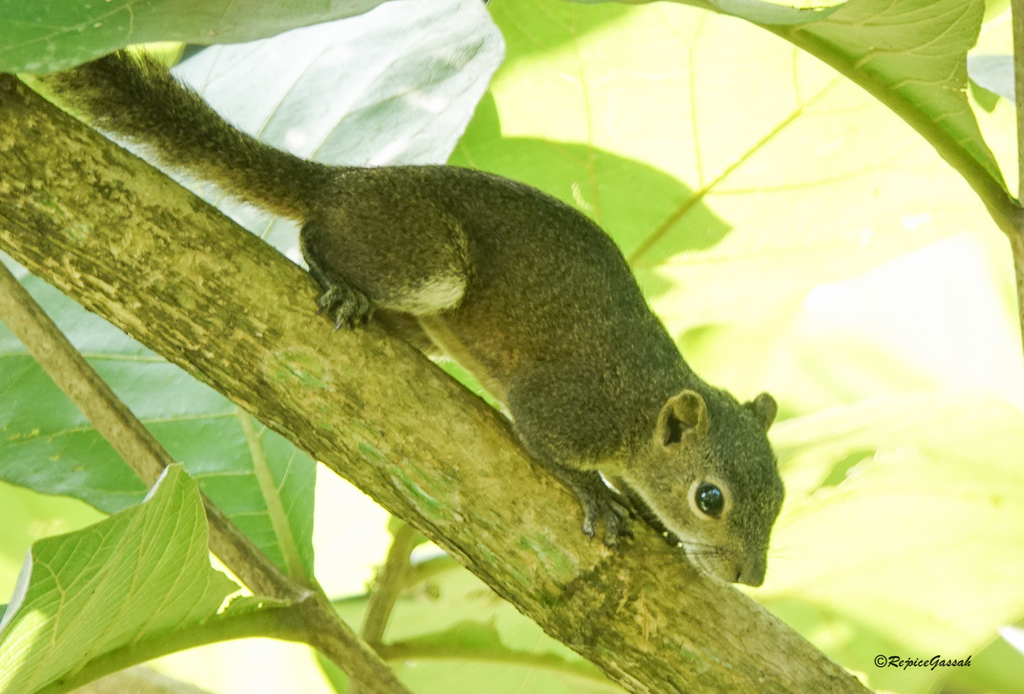
Irrawaddy Squirrel
Callosciurus pygerythrus
The Irrawaddy squirrel or hoary-bellied Himalayan squirrel (Callosciurus pygerythrus) is a species of rodent in the family Sciuridae. It is found in Bangladesh, China, India, Myanmar, and Nepal.
From the article Irrawaddy squirrel on Wikipedia (CC BY-SA), quoted section by section
Description
Irrawaddy squirrels vary in fur color, with some squirrels being greyish-brown and reddish-brown, and some squirrels being grizzled. Some squirrels have dark tips on their tails and pale hip patches. Its head to body length is about 20 centimeters and its tail length is about 20 centimeters as well. Irrawaddy squirrels weigh approximately 45 grams.
Range & habitat
It is native to Bangladesh, China, India, Myanmar, and Nepal. Most squirrels that live in Myanmar live west of the Irrawaddy River. Irrawaddy squirrels can live in several types of forests, including deciduous broad-leaved woodland, coniferous evergreen forests, mixed agricultural areas, and secondary growth forests. They can also live in lowlands and lower mountainous regions, at around 1500 meters. It is threatened by habitat loss.
Wikipedia: “Distribution”
What it does
Irrawaddy squirrels mainly eat nuts, seeds, fruits, bark, lichen, and various types of vegetation, however, they may occasionally eat insects and small vertebrates.
== References ==
Wikipedia: “Diet”
Listen
Looking for field recordings…
Where it lives
Recorded sightings
—
geo-referenced records in GBIF, from museums, herbaria and field observers.
Drag the globe to turn it. Dots are where records exist, not a range map; darker means more records.
In the stacks
Searching the stacks…
Every page naming Callosciurus pygerythrus in the Biodiversity Heritage Library →
This page is assembled live from iNaturalist, GBIF, Wikipedia, the Source Library and the Internet Archive. It is not yet part of the hand-edited codex. iNaturalist taxon 45953.