- Animals
- ›Chordates
- ›Vertebrates
- ›Mammals
- ›Therians
- ›Placental Mammals
- ›Primates, Rodents, and Allies
- ›Rodents
- ›Mice, Rats, and Hamsters
- ›Muroids
- ›Hamsters, Voles, Lemmings, and Allies
- ›South American Mice and Rats
- ›Rice Rats
- ›Megalomys
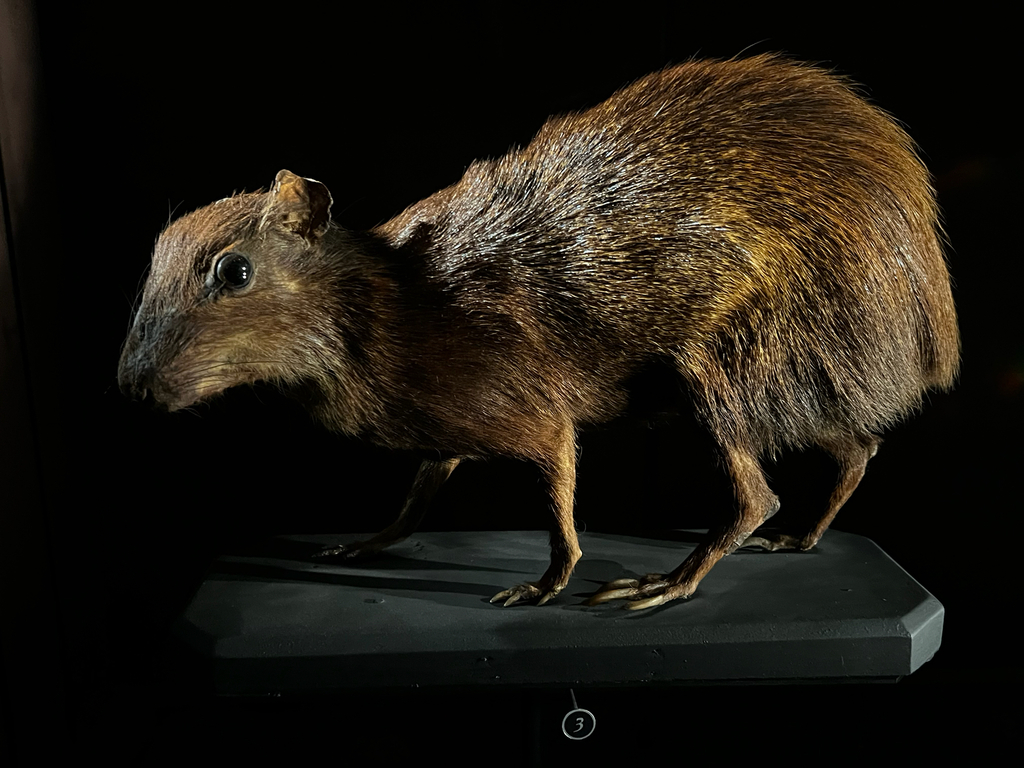
Santa Lucia giant rice rat
Megalomys luciae
Megalomys luciae, also known as the Saint Lucia pilorie or Saint Lucia giant rice rat, as well as several variant spellings, is an extinct rodent that lived on the island of Saint Lucia in the eastern Caribbean. It was the size of a small cat, and it had a darker belly than Megalomys desmarestii, a closely related species from Martinique, and slender claws. The last known specimen died in London Zoo in 1852, after three years...
From the article Megalomys luciae on Wikipedia (CC BY-SA), quoted section by section
Description
M. luciae was described as smaller than Megalomys desmarestii, a closely related species from Martinique, by Forsyth Major. The stuffed M. lucaei specimen in the collection of the Natural History Museum had a head–body length of 261 mm (10.3 in). M. luciae had slender claws and brown fur, with the fur of the specimen at the Natural History Museum having pale area under the chin and throat separated from another pale area under the lower thorax by a dark streak.
Listen
Looking for field recordings…
Where it lives
Recorded sightings
—
geo-referenced records in GBIF, from museums, herbaria and field observers.
Drag the globe to turn it. Dots are where records exist, not a range map; darker means more records.
In the stacks
Searching the stacks…
Every page naming Megalomys luciae in the Biodiversity Heritage Library →
This page is assembled live from iNaturalist, GBIF, Wikipedia, the Source Library and the Internet Archive. It is not yet part of the hand-edited codex. iNaturalist taxon 45798.