- Animals
- ›Chordates
- ›Vertebrates
- ›Mammals
- ›Therians
- ›Placental Mammals
- ›Primates, Rodents, and Allies
- ›Rodents
- ›Mice, Rats, and Hamsters
- ›Muroids
- ›Hamsters, Voles, Lemmings, and Allies
- ›South American Mice and Rats
- ›Akodonts
- ›Thalpomys
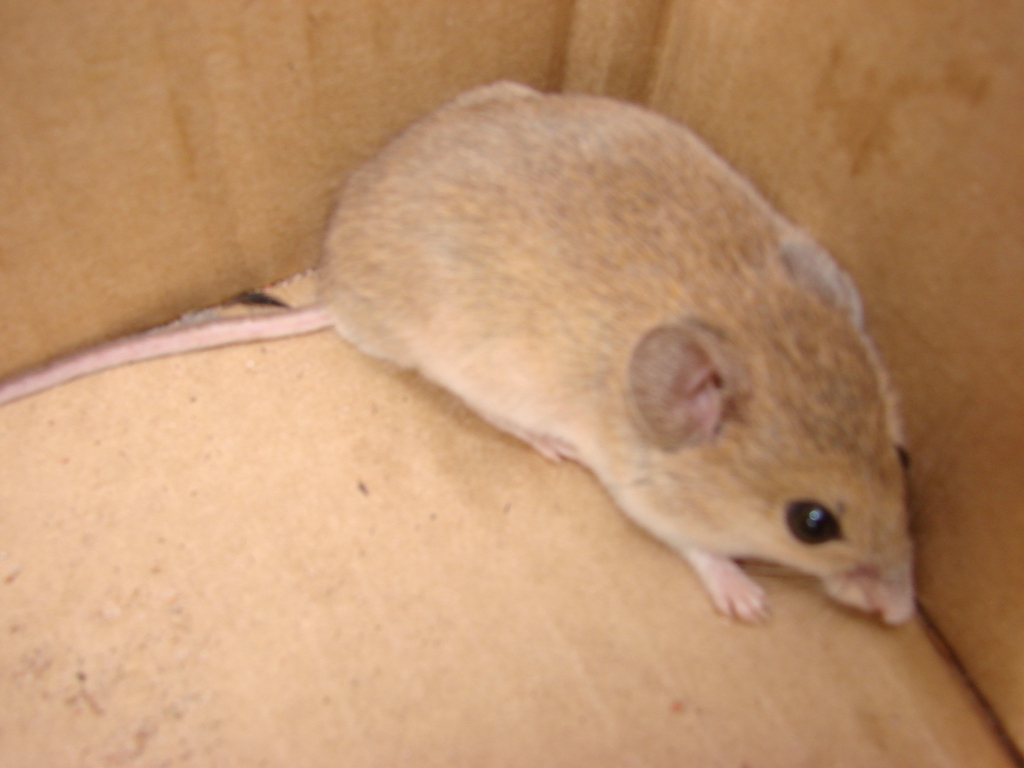
Cerrado mouse
Thalpomys cerradensis
The cerrado mouse (Thalpomys cerradensis) is a species of rodent from South America. It is found in the cerrado of Brazil.
From the article Cerrado mouse on Wikipedia (CC BY-SA), quoted section by section
Description
The cerrado mouse has a head-and-body length of more than 90 mm (3.5 in) and is larger than the only other species in the genus, the hairy-eared cerrado mouse (Thalpomys lasiotis). The fur is dense and rather stiff. The general colouring resembles some members of the Oligoryzomys genus. The dorsal pelage is reddish-brown, the individual hairs having blackish bases, orange central sections and blackish tips. There are also longer black guard hairs. The flanks and underparts are paler. The chin is buff and the eye-ring and cheeks orangish. The upper surfaces of the hindfeet are buff; they are small, with short outer toes and tiny claws. The tail, which is well-haired, is brown above and buff below. The diploid number is 36.
Range & habitat
This mouse is restricted to the cerrado ecoregion in Brazil, occurring in the states of Bahia, Goiás and Mato Grosso. It inhabits open grassland, savannah with occasional trees and wetter grassland areas with palms. It readily recolonises areas affected by wildfires, and is at its most numerous less than two years later.
Wikipedia: “Distribution and habitat”
What it does
The cerrado mouse is most active soon after dusk and in the hours before dawn. In the state of Bahia, it is hardly ever caught in the live traps used by researchers for surveying small mammals, but its presence in the area is confirmed by its abundance in barn owl pellets (the undigested parts of their prey that the owls regurgitate).
Wikipedia: “Ecology”
Listen
Looking for field recordings…
Where it lives
Recorded sightings
—
geo-referenced records in GBIF, from museums, herbaria and field observers.
Drag the globe to turn it. Dots are where records exist, not a range map; darker means more records.
In the stacks
Searching the stacks…
Every page naming Thalpomys cerradensis in the Biodiversity Heritage Library →
This page is assembled live from iNaturalist, GBIF, Wikipedia, the Source Library and the Internet Archive. It is not yet part of the hand-edited codex. iNaturalist taxon 44908.