- Animals
- ›Chordates
- ›Vertebrates
- ›Mammals
- ›Therians
- ›Placental Mammals
- ›Primates, Rodents, and Allies
- ›Rodents
- ›Mice, Rats, and Hamsters
- ›Muroids
- ›Hamsters, Voles, Lemmings, and Allies
- ›South American Mice and Rats
- ›Rice Rats
- ›Oligoryzomys
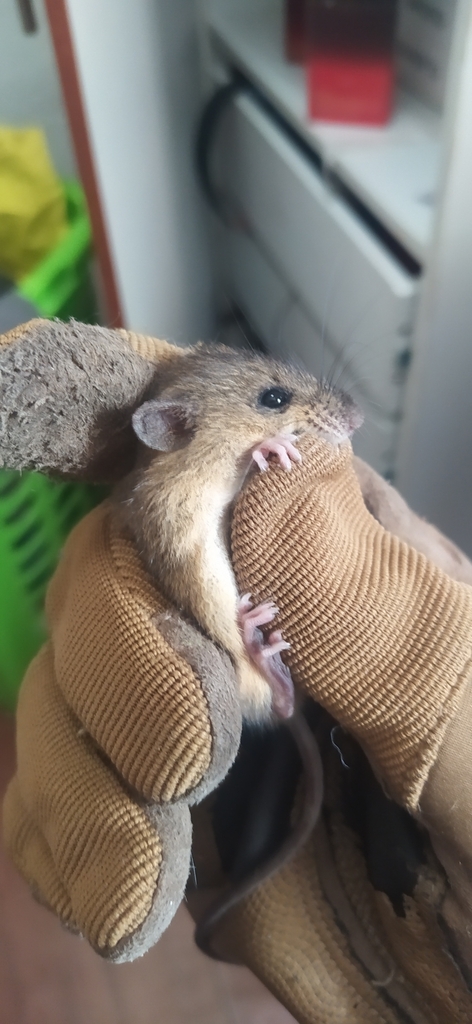
destructive pygmy rice rat
Oligoryzomys destructor
Oligoryzomys destructor, also known as Tschudi's colilargo or the destructive pygmy rice rat, is a species of rodent in the genus Oligoryzomys of family Cricetidae. It is found along the eastern Andes from southern Colombia, through Ecuador, Peru, and Bolivia into northern Argentina. Its karyotype has 2n = 60 and FNa = 76.
From the article Oligoryzomys destructor on Wikipedia (CC BY-SA), quoted section by section
Description
Oligoryzomys destructor is a small species of rice rat. The head is reddish-brown with many blackish hairs, and just behind the ears there are pale patches. The ears have short, pale brown hairs on the inside and longer, blackish hairs on the outside. The whiskers are black with white tips and the hairs at the end of the snout are white. The fur on the dorsal surface of the body is reddish-brown, interspersed with black hairs, and a few grey hairs with pale tips. The flanks are reddish-brown, the throat and chest are pale grey and the belly is yellowish-white. The tail is brown and slightly shorter than the combined head-and-body length. The upper surface of the hind feet bear short silvery hairs, with the hairs growing beside the nails being exceptionally long. The underside of the feet are pale brown.
Range & habitat
O. destructor occurs on the eastern slopes of the Andes in South America, its altitudinal range being 600 to 3,350 m (2,000 to 11,000 ft). Its range extends from southern Colombia and Ecuador to Peru, Bolivia and northwestern Argentina. Its habitat is tropical and subtropical forest and montane forest, and in Bolivia it has mostly been found in the Yungas, a transitional forest zone.
Wikipedia: “Distribution and habitat”
Listen
Looking for field recordings…
Where it lives
Recorded sightings
—
geo-referenced records in GBIF, from museums, herbaria and field observers.
Drag the globe to turn it. Dots are where records exist, not a range map; darker means more records.
In the stacks
Searching the stacks…
Every page naming Oligoryzomys destructor in the Biodiversity Heritage Library →
This page is assembled live from iNaturalist, GBIF, Wikipedia, the Source Library and the Internet Archive. It is not yet part of the hand-edited codex. iNaturalist taxon 44835.