- Animals
- ›Chordates
- ›Vertebrates
- ›Mammals
- ›Therians
- ›Placental Mammals
- ›Primates, Rodents, and Allies
- ›Rodents
- ›Mice, Rats, and Hamsters
- ›Muroids
- ›Hamsters, Voles, Lemmings, and Allies
- ›South American Mice and Rats
- ›Euneomyines
- ›Euneomys
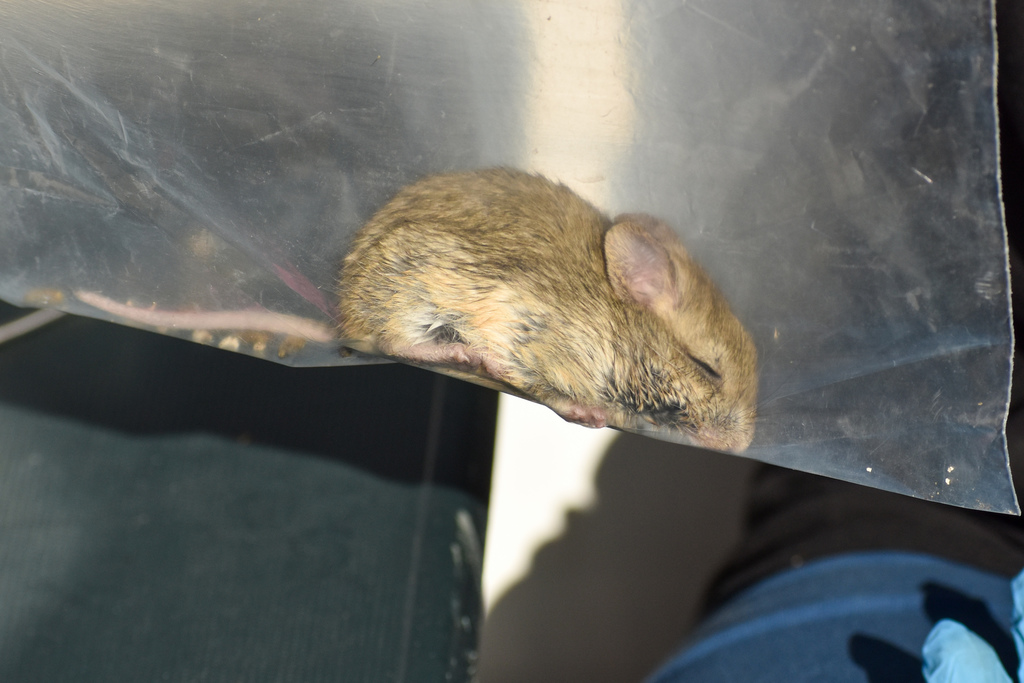
Patagonian chinchilla mouse
Euneomys chinchilloides
The Patagonian chinchilla mouse (Euneomys chinchilloides) is a species of rodent in the family Cricetidae. It was first described by George Robert Waterhouse in 1839. It is found in Tierra del Fuego and neighboring areas of southernmost Argentina and Chile.
From the article Patagonian chinchilla mouse on Wikipedia (CC BY-SA), quoted section by section
Description
The genus Euneomys are described as having medium to large body size. They have short tails and dense fur. Their molars are hypsodont. Measurements of the body length, including the head, of Euneomys chinchilloides ranges from 103 to 143 mm. Tail length ranges from 62 to 90 mm. Hindfoot length ranges from 25 to 30 mm. The length of the ear ranges from 18.5 to 22.2 mm.
Wikipedia: “Morphology”
Range & habitat
Euneomys chinchilloides can be found in the Tierra del Fuego, and are generally widespread in mainland Patagonia. They are also fairly abundant in the Sierras de Tecka, a region situated in the Andes mountains. Their habitat consists of scree that is windswept and bare.
Wikipedia: “Distribution and habitat”
Listen
Looking for field recordings…
Where it lives
Recorded sightings
—
geo-referenced records in GBIF, from museums, herbaria and field observers.
Drag the globe to turn it. Dots are where records exist, not a range map; darker means more records.
In the stacks
Searching the stacks…
Every page naming Euneomys chinchilloides in the Biodiversity Heritage Library →
This page is assembled live from iNaturalist, GBIF, Wikipedia, the Source Library and the Internet Archive. It is not yet part of the hand-edited codex. iNaturalist taxon 44819.