- Plants
- ›Vascular Plants
- ›flowering plants
- ›monocots
- ›Agaves, Orchids, Irises, and Allies
- ›Orchids
- ›Orchidoid Orchids
- ›Orchideae
- ›Orchidinae
- ›Habenaria
- ›Tridactylae
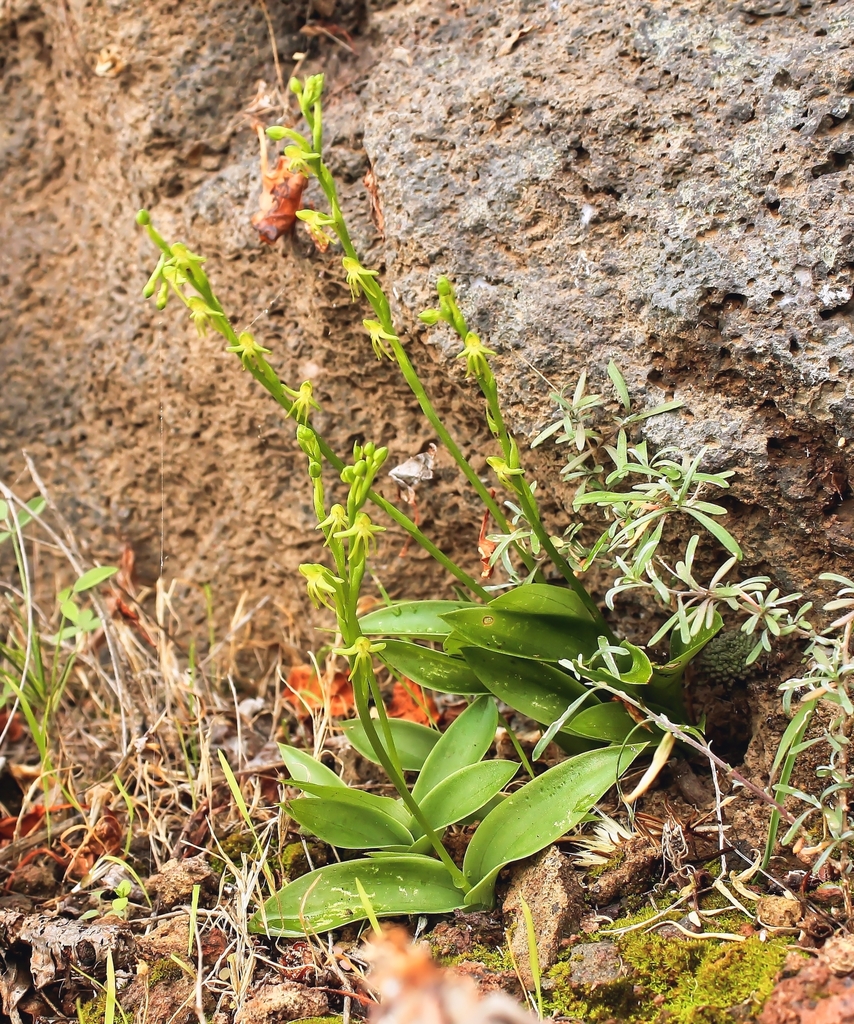
Canary Three-finger Orchid
Habenaria tridactylites
Habenaria tridactylites, the Canary three-finger orchid, is a species of flowering plant in the family Orchidaceae, native to the Canary Islands. It was first described by John Lindley in 1835.
From the article Habenaria tridactylites on Wikipedia (CC BY-SA), quoted section by section
Description
Habenaria tridactylites is a terrestrial orchid. The upper perianth segments form a "helmet". The lowest petal forms the lip, which is deeply divided into three very long lobes. The flower also has a long spur.
Range & habitat
Habenaria tridactylites is endemic to the Canary Islands. In Tenerife, it is found on forested hillsides in the lower zone; in Gran Canaria, it occurs at elevations of 200–800 m; it also occurs in the other islands – La Gomera, La Palma, El Hierro, Lanzarote and Fuerteventura.
Wikipedia: “Distribution and habitat”
Where it lives
Recorded sightings
—
geo-referenced records in GBIF, from museums, herbaria and field observers.
Drag the globe to turn it. Dots are where records exist, not a range map; darker means more records.
In the stacks
Searching the stacks…
Every page naming Habenaria tridactylites in the Biodiversity Heritage Library →
This page is assembled live from iNaturalist, GBIF, Wikipedia, the Source Library and the Internet Archive. It is not yet part of the hand-edited codex. iNaturalist taxon 436516.