Sengis
Macroscelidea
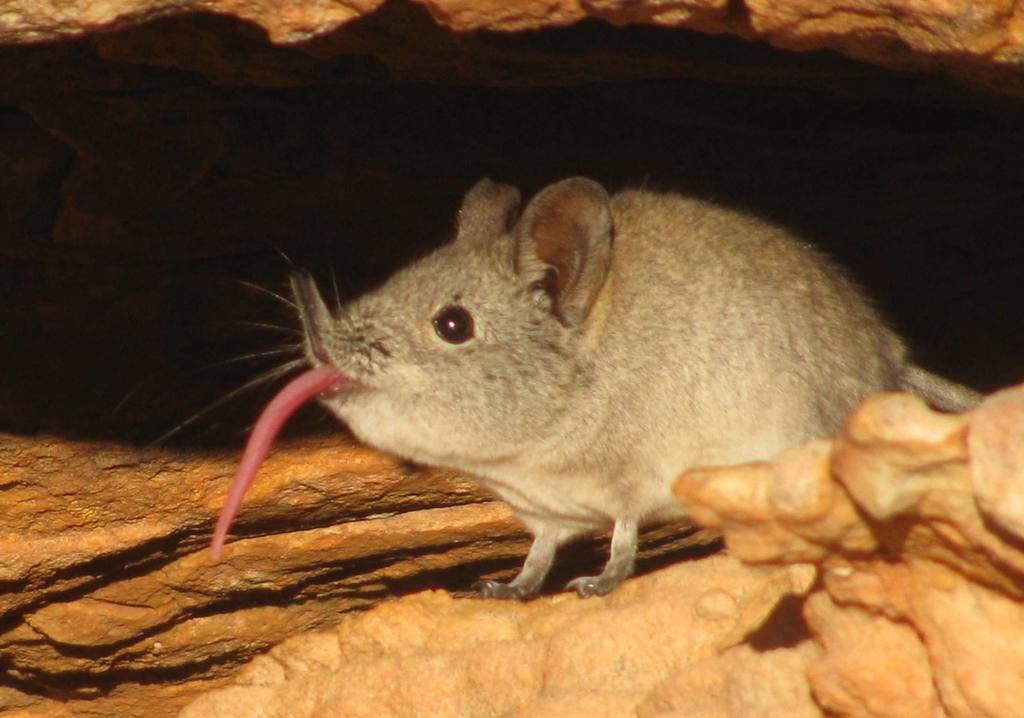
Sengis, also called elephant shrews or jumping shrews, are small insectivorous mammals native to Africa, belonging to the family Macroscelididae, in the order Macroscelidea. Their traditional common English name "elephant shrew" comes from a perceived resemblance between their long noses and the trunk of an elephant, and their superficial similarity with shrews (family Soricidae) in the order Eulipotyphla. However, phylogenetic analysis has revealed that the family was not properly classified with true shrews, in fact being more closely related to elephants. In 1997, the biologist Jonathan Kingdon proposed that they instead be called "sengis" (singular sengi), a term derived from the Bantu languages of Africa, and in 1998, they were classified into the new clade Afrotheria.
They are widely distributed across the southern part of Africa, and although common nowhere, can be found in almost any type of habitat, from the Namib Desert to boulder-strewn outcrops in South Africa to thick forest. One species, the North African sengi, remains in the semi-arid, mountainous country in the far northwest of Africa. The Somali sengi went unobserved from 1968 to 2020 but was rediscovered by a group of scientists in Djibouti.
1 branches of this order, most-observed first · about 20 known species
See this branch on the Wheel of Life →
Where it lives
Recorded sightings
—
geo-referenced records in GBIF, from museums, herbaria and field observers.
Drag the globe to turn it. Dots are where records exist, not a range map; darker means more records.
In the stacks
Searching the stacks…
Every page naming Macroscelidea in the Biodiversity Heritage Library →
This page is assembled live from iNaturalist, GBIF, Wikipedia, the Source Library and the Internet Archive. It is not yet part of the hand-edited codex. iNaturalist taxon 43208.