- Plants
- ›Vascular Plants
- ›flowering plants
- ›Dicots
- ›Mints, Plantains, Olives, and Allies
- ›pedalium family
- ›Uncarina
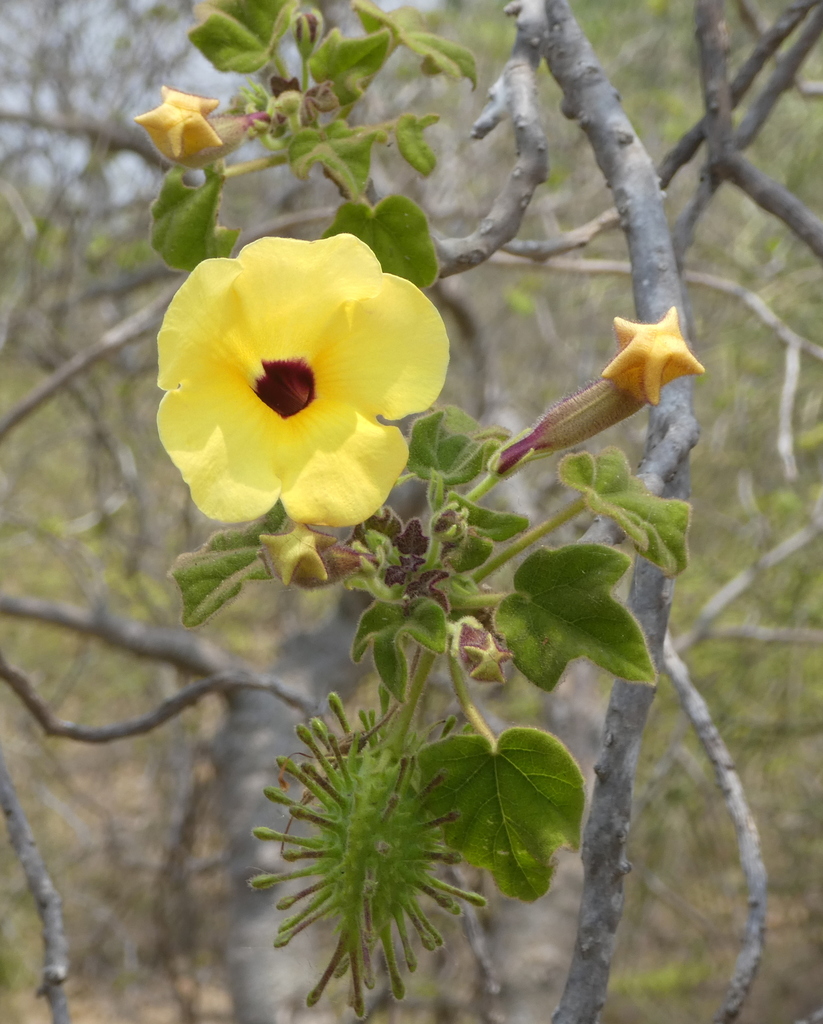
Succulent Sesame
Uncarina grandidieri
Uncarina grandidieri, also known as succulent sesame, mousetrap plant, mousetrap tree, farehitra, or farehitsy, is a species of semi-succulent, caudex-forming flowering plants native to South Madagascar. Named by Otto Stapf in 1895, it grows in desert or dry shrubland.
From the article Uncarina grandidieri on Wikipedia (CC BY-SA), quoted section by section
Description
Unlike other Uncarina species, Uncarina grandidieri has smaller leaves with a ciliate texture. The leaves are palmate, hairy, and smaller. The flowers resemble Petunia and Thunbergia flowers and are yellow. Like other Uncarina species, the fruits have barbed hooks that are lethal if swallowed by animals.
At the table
Uncarina grandidieri has been used as an ornamental plant because due to its flowers, which resembles Thunbergia and its caudex.
== References ==
Wikipedia: “Uses”
Where it lives
Recorded sightings
—
geo-referenced records in GBIF, from museums, herbaria and field observers.
Drag the globe to turn it. Dots are where records exist, not a range map; darker means more records.
In the stacks
Searching the stacks…
Every page naming Uncarina grandidieri in the Biodiversity Heritage Library →
This page is assembled live from iNaturalist, GBIF, Wikipedia, the Source Library and the Internet Archive. It is not yet part of the hand-edited codex. iNaturalist taxon 431716.