- Animals
- ›Chordates
- ›Vertebrates
- ›Mammals
- ›Therians
- ›Placental Mammals
- ›Primates, Rodents, and Allies
- ›Lagomorphs
- ›Hares and Rabbits

Riverine Rabbits
Bunolagus
The riverine rabbit (Bunolagus monticularis), also known as the bushman rabbit or bushman hare, is a species of rabbit that lives among patches of thick vegetation in the Karoo of South Africa's Western and Northern Cape provinces. It is the only member of the genus Bunolagus. It is classified a critically endangered species by the International Union for Conservation of Nature (IUCN); the most recent estimates of the species' population range from 157 to 207 mature individuals, and 224 to 380 total.
First identified in 1903 as a member of the hares, the riverine rabbit is a medium-sized rabbit, about 33.7 to 47.0 centimetres (13.3 to 18.5 in) long. Its fur has a unique dark brown stripe from the edge of its mouth to the base of its ears, and a white to grey ring around each eye. It is nocturnal and herbivorous, and its diet consists of grasses, flowers and leaves, most of which are dicotyledons. The riverine rabbit digs burrows in the soft alluvial soils of its habitat near seasonal rivers for protection from the heat and for females to nest and protect the young. It is the only African rabbit known to dig its own burrows. Riverine rabbits are polygamous, and live alone throughout the year.
1 branches of this genus, most-observed first · about 1 known species
See this branch on the Wheel of Life →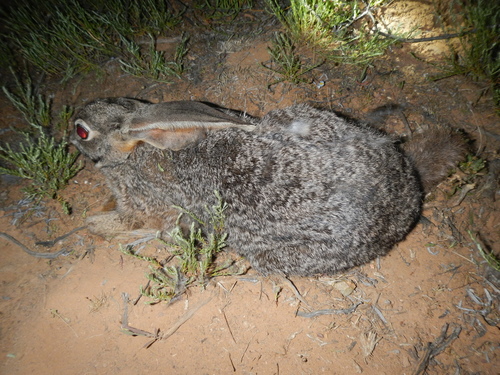
Where it lives
Recorded sightings
—
geo-referenced records in GBIF, from museums, herbaria and field observers.
Drag the globe to turn it. Dots are where records exist, not a range map; darker means more records.
In the stacks
Searching the stacks…
Every page naming Bunolagus in the Biodiversity Heritage Library →
This page is assembled live from iNaturalist, GBIF, Wikipedia, the Source Library and the Internet Archive. It is not yet part of the hand-edited codex. iNaturalist taxon 43167.