- Animals
- ›Chordates
- ›Vertebrates
- ›Mammals
- ›Therians
- ›Marsupials
- ›Kangaroos, Possums, Wombats, and Allies
- ›Gliders, Ring-tailed Possums, and allies
- ›Ring-tailed Possums and Greater Gliders
- ›Greater Gliders and allies
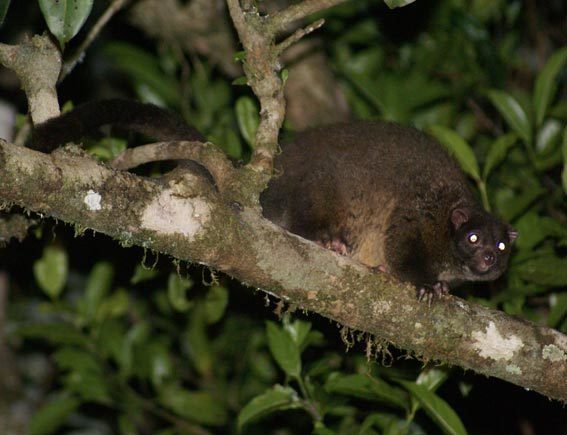
Hemibelideus
The lemuroid ringtail possum (Hemibelideus lemuroides), also known as the lemur-like ringtail possum or the brushy-tailed ringtail, is a truly singular member of the ringtail possum group. It was once thought that they were greater gliders (Petauroides volans); Hemibelideus literally translates as "half-glider" (belideus being a diminutive form of Petaurus, meaning "glider"). Named for their facial characteristics visually similar to the unrelated primate lemurs, with short snouts, large, forward-facing eyes and small ears, they are similar to other gliding possums in their musculo-skeletal adaptations to accommodate a leaping lifestyle. Their long, prehensile tail is a further adaptation to their arboreal habitat.
It has a bushier tail when compared to other ringtails, and can be distinguished from the greater glider by its lack of gliding membrane and much shorter, hairless ears. It is a social possum, and is found in two main colour forms: the more common brownish-gray form, with a yellowish underbelly, and a rare white form, which occurred in the Daintree Rainforest and was last seen in 2005 in Mount Lewis National Park, and in 2008 believed to have been nearly extinct.
1 branches of this genus, most-observed first · about 1 known species
See this branch on the Wheel of Life →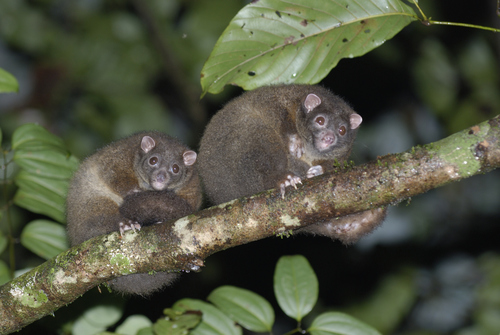
Where it lives
Recorded sightings
—
geo-referenced records in GBIF, from museums, herbaria and field observers.
Drag the globe to turn it. Dots are where records exist, not a range map; darker means more records.
In the stacks
Searching the stacks…
Every page naming Hemibelideus in the Biodiversity Heritage Library →
This page is assembled live from iNaturalist, GBIF, Wikipedia, the Source Library and the Internet Archive. It is not yet part of the hand-edited codex. iNaturalist taxon 42780.