- Animals
- ›Chordates
- ›Vertebrates
- ›Mammals
- ›Therians
- ›Marsupials
- ›Opossums
- ›Opossums
- ›Large American Opossums, Mouse Opossums, and Allies
- ›Gracile Opossums
- ›Thylamys
- ›Thylamys
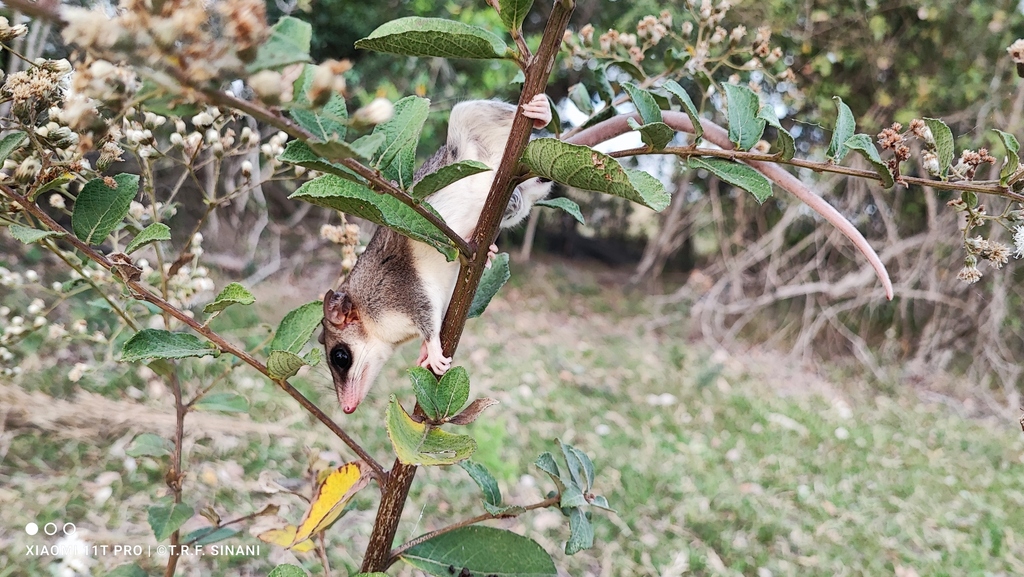
Paraguayan Fat-tailed Mouse Opossum
Thylamys macrurus
The Paraguayan fat-tailed mouse opossum (Thylamys macrurus) is a species of opossum in the family Didelphidae. It is found in forested areas of Brazil and Paraguay. It is known only from a few specimens. For two listed specimens, one had a head-and-body length of about 135 mm and a tail length of about 140 mm, while the other had a head-and-body length of about 120 mm and a tail length of about 155 mm. Most of its fur is gray,...
From the article Paraguayan fat-tailed mouse opossum on Wikipedia (CC BY-SA), quoted section by section
Description
It is known only from a few specimens. For two listed specimens, one had a head-and-body length of about 135 mm and a tail length of about 140 mm, while the other had a head-and-body length of about 120 mm and a tail length of about 155 mm. Most of its fur is gray, but the shoulder areas are reddish gray, and the ventral fur is pure white or creamy white. There is also a ring of black fur surrounding each eye. The ventral surface of the tail is white. The dorsal surface of the tail is gray for the first one third to one half of its length (going from the base to the tip); the remainder of the dorsal surface of the tail is white. The tail is hairless except for about its first ten mm (going from the base to the tip). Although the genus Thylamys is characterized by fat storage in the tail, there is no evidence that this species stores fat in its tail.
== References ==
Listen
Looking for field recordings…
Where it lives
Recorded sightings
—
geo-referenced records in GBIF, from museums, herbaria and field observers.
Drag the globe to turn it. Dots are where records exist, not a range map; darker means more records.
In the stacks
Searching the stacks…
Every page naming Thylamys macrurus in the Biodiversity Heritage Library →
This page is assembled live from iNaturalist, GBIF, Wikipedia, the Source Library and the Internet Archive. It is not yet part of the hand-edited codex. iNaturalist taxon 42691.