- Plants
- ›Vascular Plants
- ›flowering plants
- ›Dicots
- ›Nances, Willows, and Allies
- ›willow family
- ›Salix
- ›Salix
- ›Tetraspermae
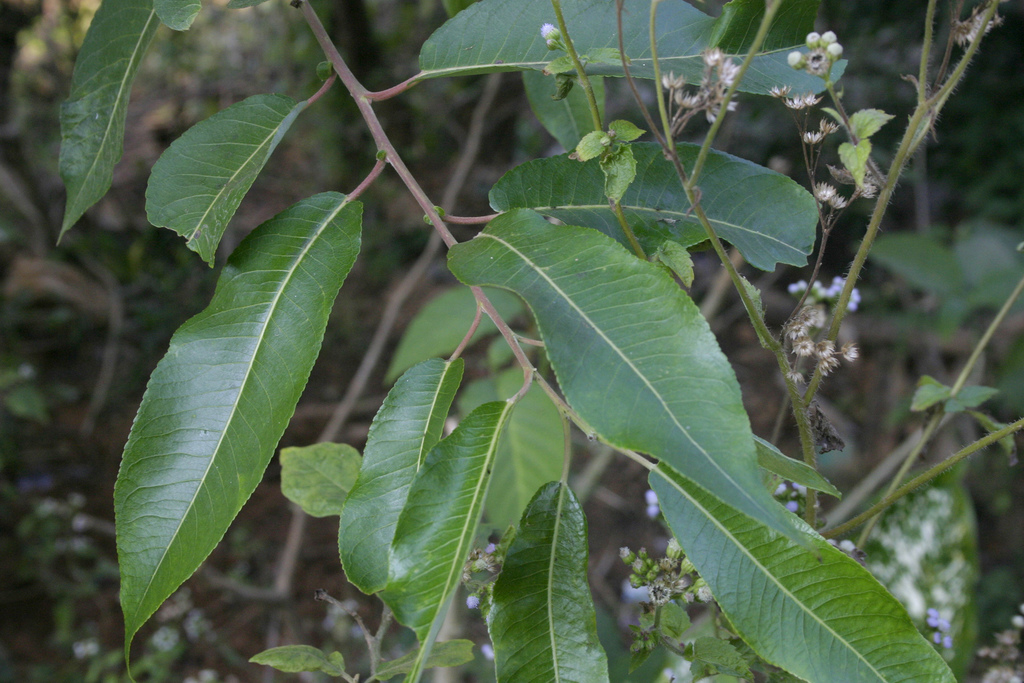
Indian Willow
Salix tetrasperma
Salix tetrasperma, commonly called Indian willow, is a medium-sized tree of wet and swampy places, shedding its leaves at the end of monsoon season. It flowers after leafing. The bark is rough, with deep, vertical fissures and the young shoots leaves are silky. The leaves are lance-like, or ovate-lancelike, 8–15 cm long, with minutely and regularly toothed margins. The male sweet scented catkins are 5–10 cm long, and are borne on leafy branchlets. The female catkins are 8–12 cm long. The capsules are long, stipulate, in groups of 3 to 4.
It grows in many parts of south and southeastern Asia, including India, Pakistan, Bangladesh, Nepal, Laos, and Thailand.
Where it lives
Recorded sightings
—
geo-referenced records in GBIF, from museums, herbaria and field observers.
Drag the globe to turn it. Dots are where records exist, not a range map; darker means more records.
In the stacks
Searching the stacks…
Every page naming Salix tetrasperma in the Biodiversity Heritage Library →
This page is assembled live from iNaturalist, GBIF, Wikipedia, the Source Library and the Internet Archive. It is not yet part of the hand-edited codex. iNaturalist taxon 426588.