- Animals
- ›Chordates
- ›Vertebrates
- ›Mammals
- ›Therians
- ›Placental Mammals
- ›Ungulates, Carnivorans, and Allies
- ›Even-toed Ungulates and Cetaceans
- ›Ruminants
- ›Bovids
- ›Antelopes, Goats, and Sheep
- ›Goats and Sheep
- ›Capra
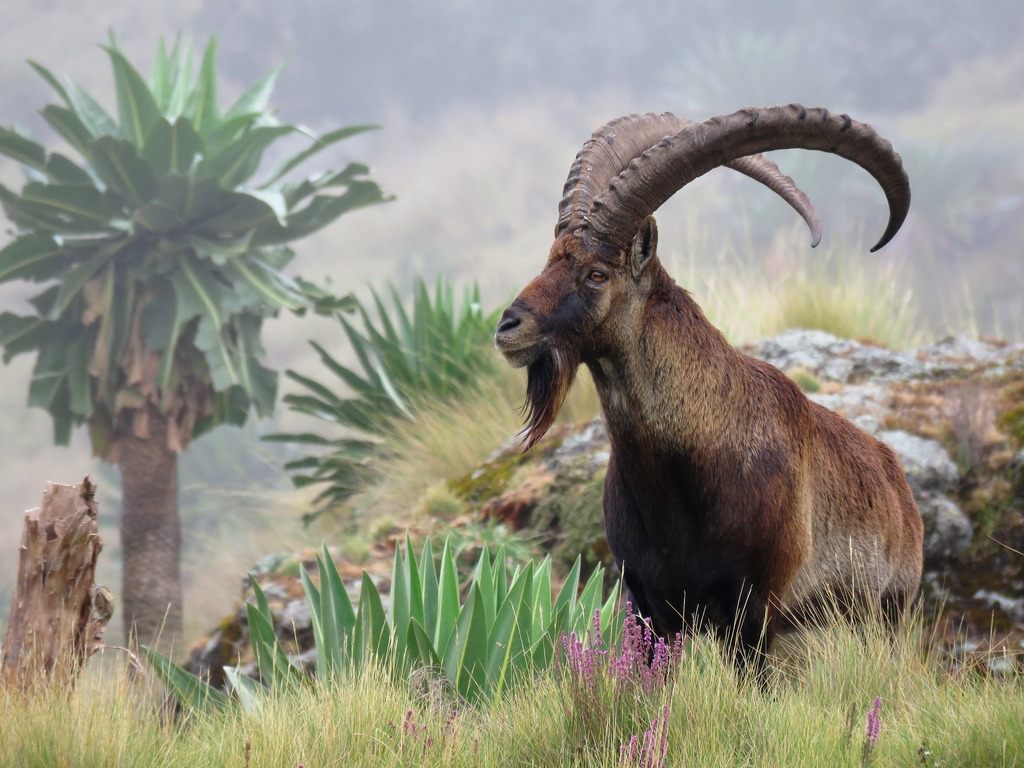
Walia Ibex
Capra walie
The Walia ibex (Capra walie, Amharic: ዋልያ wālyā) is a critically endangered species of ibex. It is sometimes considered an endemic subspecies of the Alpine ibex. If the population were to increase, the surrounding mountain habitat would be sufficient to sustain only 2,000 ibex. The adult Walia ibex's only known wild predators are the hyena and leopard. However, young ibex are often hunted by a variety of fox and cat species. The ibex are members of the goat family, and the Walia ibex is the southernmost of today's ibexes. In the late 1990s, the Walia ibex went from endangered to critically endangered due to the declining population. The Walia ibex is also known as the Abyssinian ibex.
Given the small distribution range of the Walia ibex in its restricted mountain ecosystem, the presence of many domestic goats may pose a serious threat that can directly affect the population's survival.
From the article Walia ibex on Wikipedia (CC BY-SA), quoted section by section
Description
These animals have a chocolate-brown to chestnut-brown coat coloration, greyish-brown muzzle, and a lighter grey in the eyes and legs. The belly and insides of the legs are white, and black and white patterns stretch upon the legs of these animals. The males weigh 80–125 kg (180–280 lb) and have very large horns which curve backwards, reaching lengths up to 110 cm (43 in).
Wikipedia: “Appearance”
Range & habitat
The Walia ibex lives in very steep, rocky cliff areas between 2,500 and 4,500 m (8,200 and 14,800 ft) high. Their habitats are mountain forests, subalpine grasslands, and scrub. They are grazers. Their diets include bushes, herbs, lichens, shrubs, grasses, and creepers. They often stand on their hind legs to get to young shoots of giant heath. Walia ibex are most active in the morning and evening and will rest in the sun on rock ledges. Males live in bachelor groups and females live in groups with their offspring. Mating season is at the summit from March to May. Males compete for females by ramming their horns with amazing force. Gestation periods last 150–165 days. They reach sexual maturity at one year of age.
Wikipedia: “Habitat and ecology”
Listen
Looking for field recordings…
Where it lives
Recorded sightings
—
geo-referenced records in GBIF, from museums, herbaria and field observers.
Drag the globe to turn it. Dots are where records exist, not a range map; darker means more records.
In the stacks
Searching the stacks…
Every page naming Capra walie in the Biodiversity Heritage Library →
This page is assembled live from iNaturalist, GBIF, Wikipedia, the Source Library and the Internet Archive. It is not yet part of the hand-edited codex. iNaturalist taxon 42354.