- Animals
- ›Chordates
- ›Vertebrates
- ›Mammals
- ›Therians
- ›Placental Mammals
- ›Ungulates, Carnivorans, and Allies
- ›Even-toed Ungulates and Cetaceans
- ›Ruminants
- ›Bovids
- ›Antelopes, Goats, and Sheep
- ›Reduncines
- ›Redunca
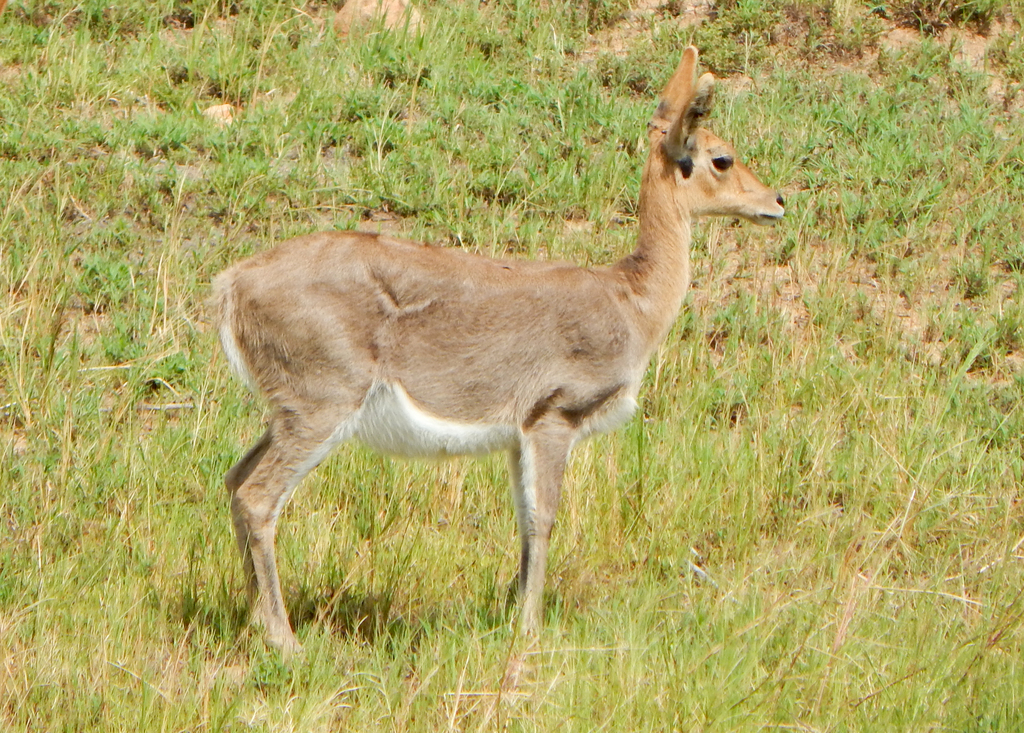
Mountain Reedbuck
Redunca fulvorufula
The mountain reedbuck (Redunca fulvorufula) is an antelope found in mountainous areas of much of sub-Saharan Africa.
From the article Mountain reedbuck on Wikipedia (CC BY-SA), quoted section by section
Description
The mountain reedbuck averages 75 cm (30 in) at the shoulder, and weighs around 30 kg (66 lb). It has a grey coat with a white underbelly and reddish-brown head and shoulders. The male has ridged horns of around 15.2 cm (6.0 in), which curve forwards. Both sexes have a dark scent patch beneath the ears.
Range & habitat
The mountain reedbuck occurs in three separate geographic areas, each containing a separate subspecies. The southern mountain reedbucks inhabits an area from the eastern Cape Province (South Africa) to southeastern Botswana. Chanler's mountain reedbuck occurs in Tanzania, Kenya, Uganda, Sudan, and Ethiopia. The Adamawa mountain reedbuck is only been found at the Nigeria-Cameroon border. The species occupies ridges and hillsides in rocky country and high-elevation grasslands (often with some tree or bush cover), at elevations of 1,500–5,000 m. Current total population of all subspecies has been estimated at some 36,000 individuals.
Wikipedia: “Distribution and habitat”
What it does
Mountain reedbucks are predominantly grazers, and water is an important habitat requirement. They tend to feed in the early evening and morning hours, normally in small groups of six or fewer animals. A typical group is made up of one adult male and several adult females and juveniles. Adolescent males are forced out of their herds and form small bachelor herds. Lifespan in the wild is unknown, but specimens of related species in captivity have been recorded to live up to 18 years. The mountain reedbuck is subject to some pressure from hunting and human encroachment on its habitat, and current populations appear to be declining. This species is classified as Endangered by the IUCN.
== References ==
Wikipedia: “Ecology”
Listen
Looking for field recordings…
Where it lives
Recorded sightings
—
geo-referenced records in GBIF, from museums, herbaria and field observers.
Drag the globe to turn it. Dots are where records exist, not a range map; darker means more records.
In the stacks
Searching the stacks…
Every page naming Redunca fulvorufula in the Biodiversity Heritage Library →
This page is assembled live from iNaturalist, GBIF, Wikipedia, the Source Library and the Internet Archive. It is not yet part of the hand-edited codex. iNaturalist taxon 42306.