- Animals
- ›Arthropods
- ›Chelicerates
- ›Arachnids
- ›Spiders
- ›Typical Spiders
- ›Entelegyne Spiders
- ›RTA Clade Spiders
- ›Huntsman Spiders
- ›Eusparassinae
Leucorchestris
Leucorchestris is a genus of African huntsman spiders that was first described in 1962 by R. F. Lawrence, who described all of the species in the genus between 1962 and 1966.
Leucorchestris species, also known as a "dancing white lady spiders", are white, wandering spiders that are strictly nocturnal and live in burrows that have been dug into the desert sand. They spend their days burrowed in the sand and only come out to the surface at night. When it is time to come out, Leucorchestris only come out for hunting, mating, and chasing other male spiders. Males are known well for the long distances that they travel when searching for females to mate with. When the male spiders leave their burrows to go out and search for female spiders for mating, their trips usually go as far out as 40-60 m away from their burrows and they are still able to find their way back to them without retracing the path that they took when leaving. Leucorchestris species communicate through vibrations called drumming. This is what they use to steer away from other male spiders during mating time and to find the female spiders.
7 branches of this genus, most-observed first
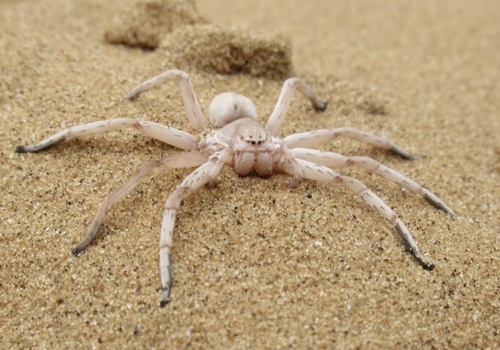
Dancing White Lady
speciesLeucorchestris arenicola
Leucorchestris flavimarginata
speciesLeucorchestris flavimarginata
Leucorchestris porti
speciesLeucorchestris porti
Leucorchestris sabulosa
speciesLeucorchestris sabulosa
Leucorchestris steyni
speciesLeucorchestris steyni
Leucorchestris setifrons
speciesLeucorchestris setifrons
Leucorchestris alexandrina
speciesLeucorchestris alexandrina
Where it lives
Recorded sightings
—
geo-referenced records in GBIF, from museums, herbaria and field observers.
Drag the globe to turn it. Dots are where records exist, not a range map; darker means more records.
In the stacks
Searching the stacks…
Every page naming Leucorchestris in the Biodiversity Heritage Library →
This page is assembled live from iNaturalist, GBIF, Wikipedia, the Source Library and the Internet Archive. It is not yet part of the hand-edited codex. iNaturalist taxon 420712.