- Animals
- ›Chordates
- ›Vertebrates
- ›Mammals
- ›Therians
- ›Placental Mammals
- ›Ungulates, Carnivorans, and Allies
- ›Even-toed Ungulates and Cetaceans
- ›Cetaceans and Hippopotamuses
- ›Cetaceans
- ›Toothed Whales
- ›Oceanic Dolphins and Porpoises

Oceanic Dolphins
Delphinidae
Oceanic dolphins or Delphinidae are a widely distributed family of dolphins that live in the sea. Close to forty extant species are recognised. They include several big species whose common names contain "whale" rather than "dolphin", such as the Globicephalinae (round-headed whales, which include the false killer whale and pilot whale). Delphinidae is a family within the superfamily Delphinoidea, which also includes the porpoises (Phocoenidae) and the Monodontidae (beluga whale and narwhal). River dolphins are a grouping of at least three cetacean superfamilies which form a sister group to Delphinoidea.
Oceanic dolphins range in size from the 1.7-metre-long (5 ft 7 in) and 50-kilogram (110-pound) Maui's dolphin to the 9.4-metre (31 ft) and 10-metric-ton (11-short-ton) orca, the largest known dolphin. Several species exhibit sexual dimorphism; the males are larger than females. They have streamlined muscular bodies and two limbs that are modified into flippers. Though not quite as flexible as seals, some dolphins can travel at speeds 29 km/h (18 mph) for short distances. Most delphinids primarily eat fish, along with a smaller number of squid and small crustaceans, but some species specialise in eating squid, or, in the case of the orca, also eat marine mammals and birds. All, however, are purely carnivorous. They typically have between 100 and 200 teeth, although a few species have considerably fewer. Delphinids travel in large pods, which may number a thousand individuals in some species. Each pod forages over a range of tens to hundreds of square kilometres.
6 branches of this family, most-observed first · about 38 known species
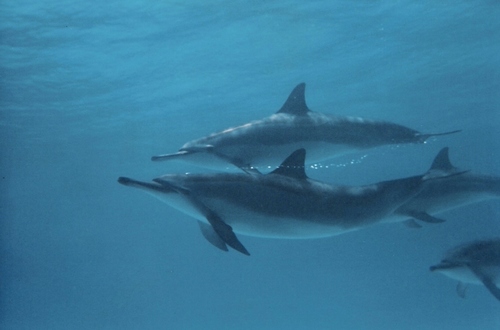
Long-nosed Dolphins
subfamilyDelphininae

Orcinus
genusOrcinus
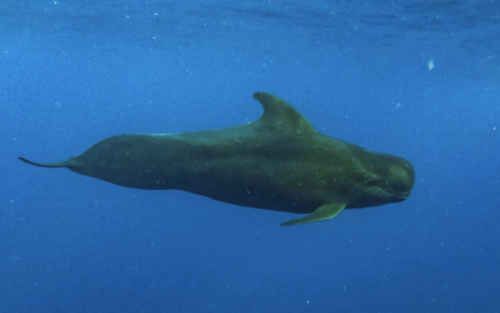
Pilot Whales and allies
subfamilyGlobicephalinae

Right Whale Dolphins and allies
subfamilyLissodelphininae

Leucopleurus
genusLeucopleurus

Lagenorhynchus
genusLagenorhynchus
Where it lives
Recorded sightings
—
geo-referenced records in GBIF, from museums, herbaria and field observers.
Drag the globe to turn it. Dots are where records exist, not a range map; darker means more records.
In the stacks
Searching the stacks…
Every page naming Delphinidae in the Biodiversity Heritage Library →
This page is assembled live from iNaturalist, GBIF, Wikipedia, the Source Library and the Internet Archive. It is not yet part of the hand-edited codex. iNaturalist taxon 41479.