- Animals
- ›Chordates
- ›Vertebrates
- ›Mammals
- ›Therians
- ›Placental Mammals
- ›Ungulates, Carnivorans, and Allies
- ›Even-toed Ungulates and Cetaceans
- ›Cetaceans and Hippopotamuses
- ›Cetaceans
- ›Toothed Whales
- ›Beaked Whales
- ›Beaked Whales
- ›Mesoplodon
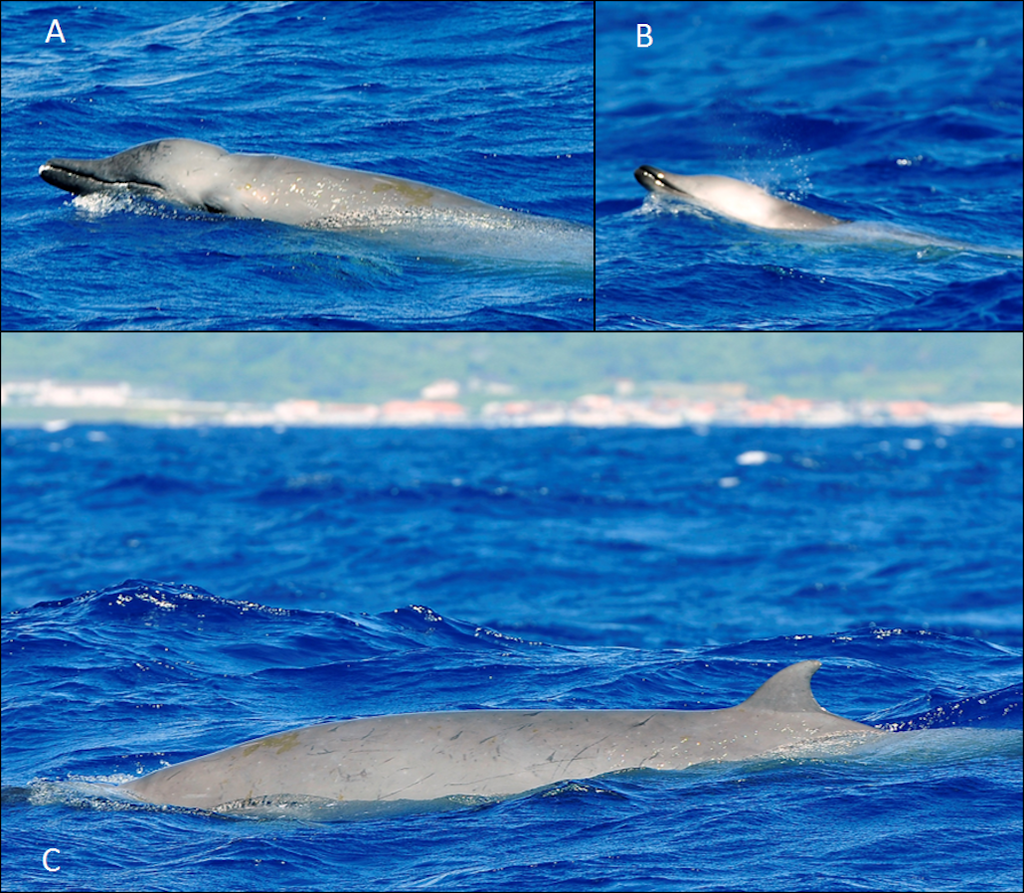
True's Beaked Whale
Mesoplodon mirus
True's beaked whale (Mesoplodon mirus) is a medium-sized whale in the mesoplodont genus. The common name is in reference to Frederick W. True, a curator at the United States National Museum (now the Smithsonian). There are two distinct populations in the Atlantic and Indian Oceans (this species is absent in the tropics) which may be separate subspecies.
From the article True's beaked whale on Wikipedia (CC BY-SA), quoted section by section
Range & habitat
This species is found predominantly in the North Atlantic and has stranded from Nova Scotia in the western Atlantic to Ireland in the eastern Atlantic and as far south as Florida, the Bahamas, and Canary Islands. However true's beaked whales have also been found stranded on the south-east coast of South Africa, Brazil, South Australia, and New Zealand indicating a presence in both the Southern Atlantic Ocean and the Indian Ocean.
Wikipedia: “Population and distribution”
What it does
They have been seen in small groups, and are believed to be squid eaters. The most complete description of recorded live sightings and strandings, as well as the first underwater footage, was published in a 2017 article by Natacha Aguilar de Soto in the open access journal PeerJ.
Wikipedia: “Behavior”
Listen
Looking for field recordings…
Where it lives
Recorded sightings
—
geo-referenced records in GBIF, from museums, herbaria and field observers.
Drag the globe to turn it. Dots are where records exist, not a range map; darker means more records.
In the stacks
Searching the stacks…
Every page naming Mesoplodon mirus in the Biodiversity Heritage Library →
This page is assembled live from iNaturalist, GBIF, Wikipedia, the Source Library and the Internet Archive. It is not yet part of the hand-edited codex. iNaturalist taxon 41411.