- Animals
- ›Chordates
- ›Vertebrates
- ›Mammals
- ›Therians
- ›Placental Mammals
- ›Ungulates, Carnivorans, and Allies
- ›Bats
- ›Yangochiroptera
- ›Vespertilionoid Bats
- ›Evening Bats
- ›Vesper Bats
- ›Hairy-tailed Bats
- ›Lasiurus
- ›Dasypterus
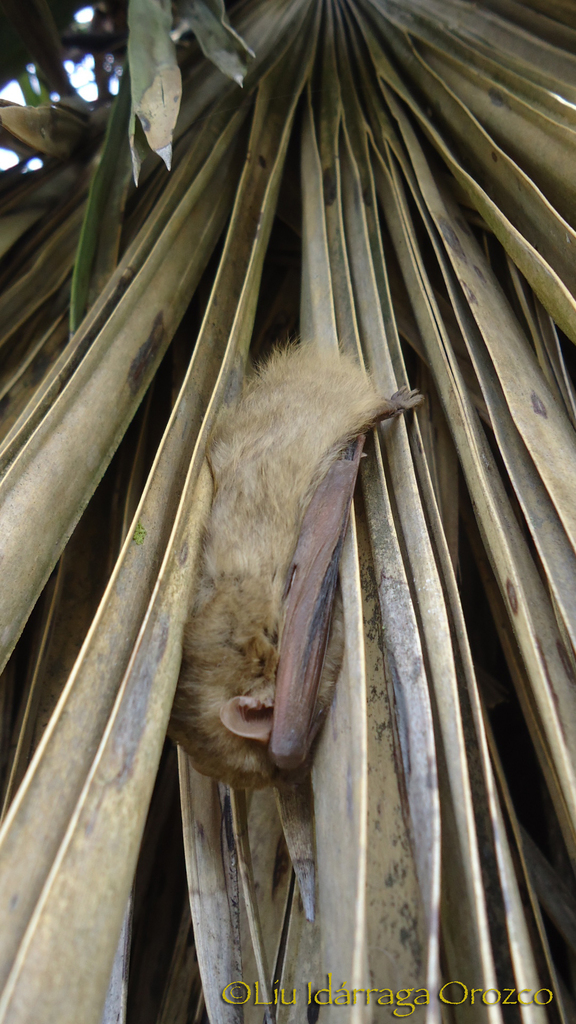
Southern Yellow Bat
Lasiurus ega
The southern yellow bat (Lasiurus ega) is a species of vesper bat that belongs to suborder microchiroptera (microbat) in the family Vespertilionidae. It is native to South, North and Central America, from the Rio Grande Valley of Texas in the United States to Argentina.
From the article Southern yellow bat on Wikipedia (CC BY-SA), quoted section by section
Description
The southern yellow bat is a small bat covered with yellow fur as its name indicates. Generally, females are larger than males. Forearm length of female averages 4% (1.83 mm) greater than that of males.
Range & habitat
Southern yellow bats occur in the southwestern United States to northern Argentina and Uruguay, with the most austral record being Buenos Aires province, Argentina, at 40° S. They reside in wooded area such as forest, foliage, and palms. They occasionally occupy other sites that resemble large dead leaves, such as dried corn stalks and thatched roofing This species roosts in trees and vegetation. In Texas, their preferred roosting sites are the frond "skirts" of both wild and ornamental palm trees, such as Sabal mexicana and Washingtonia robusta. These are collections of dead fronds against the trunk and provide a favored dark habitat for the bats. Palms are also home to insects, which the bats eat.
Wikipedia: “Range and habitat”
What it does
The southern yellow bat is a nocturnal insectivore. They forage for one to two hours after sunset on small to medium-sized flying insects. They usually feed near their roost, and go no farther than necessary for water.
Wikipedia: “Diet”
Listen
Looking for field recordings…
Where it lives
Recorded sightings
—
geo-referenced records in GBIF, from museums, herbaria and field observers.
Drag the globe to turn it. Dots are where records exist, not a range map; darker means more records.
In the stacks
Searching the stacks…
Every page naming Lasiurus ega in the Biodiversity Heritage Library →
This page is assembled live from iNaturalist, GBIF, Wikipedia, the Source Library and the Internet Archive. It is not yet part of the hand-edited codex. iNaturalist taxon 40526.