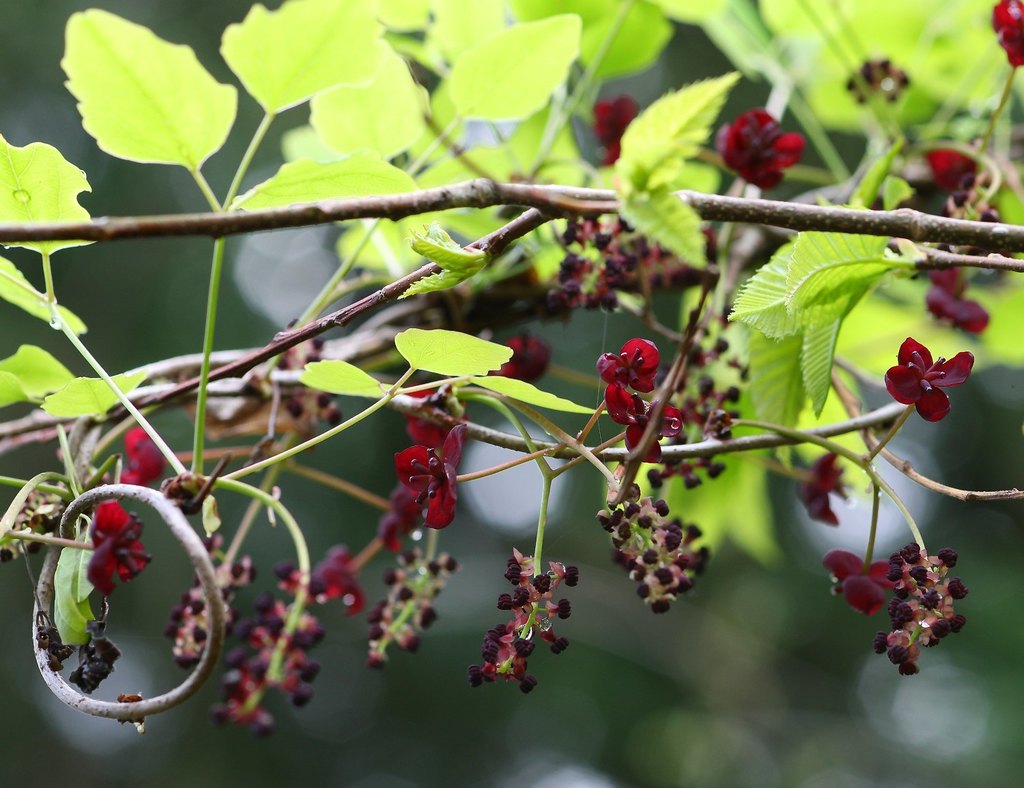
three-leaf akebia
Akebia trifoliata
Akebia trifoliata also known as chocolate vine, three leaf chocolate vine or three leaf akebia, is a species of flowering plant. It is a close relative of the more commonly known Akebia quinata.
From the article Akebia trifoliata on Wikipedia (CC BY-SA), quoted section by section
Description
Akebia trifoliata is a climbing vine with leaves composed of three ovate, slightly lobed leaflets, often bronze-tinted when young. It grows up to 9.1 m (30 ft) long. It loses its leaves in cold climates, but the twining woody branches are handsome even when bare. Flowers are deep purple in short racemes and followed by light purple fruits. Like Akebia quinata, it grows in USDA hardiness zones from 5a to 9b: from −20 °F (−28.9 °C) to 30 °F (−1.1 °C).
At the table
The plant is grown for its ornamental appeal but also for the edible oblong purplish fruits. The fruit itself has a mild flavor reminiscent of coconut or tapioca and is considered quite sweet. It has a mild melon flavor when eaten ripe
Wikipedia: “Culinary uses”
In medicine
It is used in traditional Chinese medicine to help with urinary tract infections and "quickening blood flow." Extracts of the fruits have been shown to have diuretic properties (reduction of water-weight), hepato-regenerative, neuroprotective, analgesic, anti-inflammatory, and anti-obesity effects. It has been shown to help with weight loss in vitro and reduction of fat deposition. The rind, though inedible, has been found to contain a high concentration of cancer fighting antioxidants which can be extracted by making a tea out of the rind. Akebia trifoliata also has been used to create an "antibacterial pectin" from its waste products which may increase the profitability of the plant when grown commercially.
Wikipedia: “Medicinal uses”
Where it lives
Recorded sightings
—
geo-referenced records in GBIF, from museums, herbaria and field observers.
Drag the globe to turn it. Dots are where records exist, not a range map; darker means more records.
In the stacks
Searching the stacks…
Every page naming Akebia trifoliata in the Biodiversity Heritage Library →
This page is assembled live from iNaturalist, GBIF, Wikipedia, the Source Library and the Internet Archive. It is not yet part of the hand-edited codex. iNaturalist taxon 367374.