- Plants
- ›Vascular Plants
- ›flowering plants
- ›Dicots
- ›Soapberries, Cashews, Mahoganies, and Allies
- ›Cashew Family
- ›cashews, sumacs, and allies
- ›Mangifera
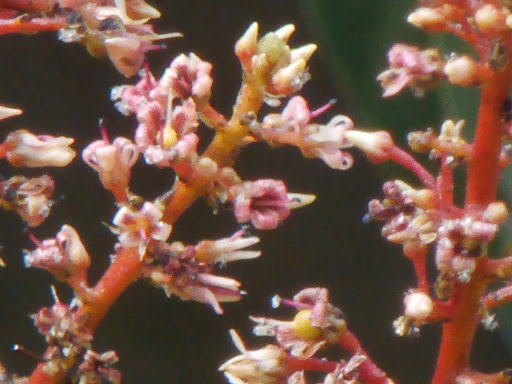
Horse Mango
Mangifera foetida
Mangifera foetida (also called horse mango, malmut, limus, bachang, machang, and kemantan in Borneo) is a species of flowering plant in the family Anacardiaceae. It is found in wet-land rainforest regions of Borneo, Cambodia, Indonesia, Malaysia, Myanmar, Thailand, and Vietnam.
From the article Mangifera foetida on Wikipedia (CC BY-SA), quoted section by section
Description
Bachang trees take 6-8 years from planting time to harvest. Propagation is primarily by seed, though budding is also possible. The fruit is approximately 100-200g and has a very strong smell of turpentine. The ripe fruit contains an irritant that can inflame the lips and mouth.
At the table
In Indonesia, the unripe fruit (after being washed with salt water) is used in vegetable salads (rujak) and in sour pickle (acar). The ripe fruit can also be used to extract the juices or made into jam. Two known varieties found in Borneo can be very sweet or sour. Other uses: The seed make good rootstock for grafting other type of mango for it resistant to diseases.
Wikipedia: “Uses”
Where it lives
Recorded sightings
—
geo-referenced records in GBIF, from museums, herbaria and field observers.
Drag the globe to turn it. Dots are where records exist, not a range map; darker means more records.
In the stacks
Searching the stacks…
Every page naming Mangifera foetida in the Biodiversity Heritage Library →
This page is assembled live from iNaturalist, GBIF, Wikipedia, the Source Library and the Internet Archive. It is not yet part of the hand-edited codex. iNaturalist taxon 348333.