- Plants
- ›Vascular Plants
- ›flowering plants
- ›Dicots
- ›Soapberries, Cashews, Mahoganies, and Allies
- ›soapberry family
- ›Pometia
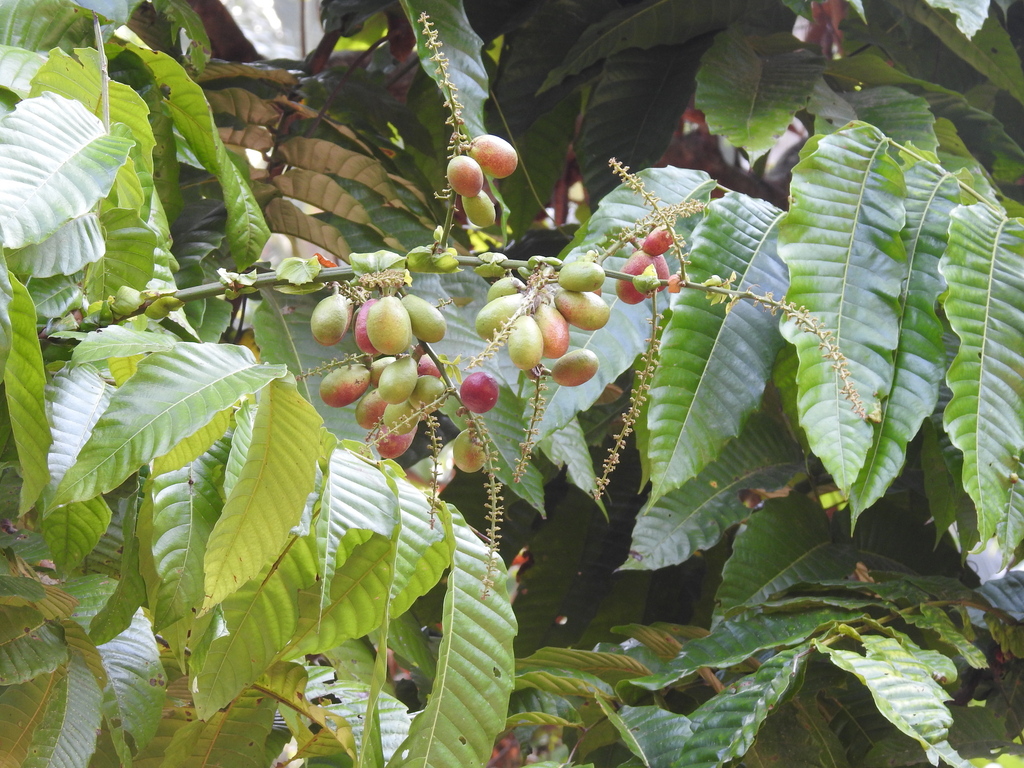
Fijian longan
Pometia pinnata
The Pometia pinnata is a tropical hardwood tree species that is widespread in the Pacific and Southeast Asian regions. The tree species has many common names, including matoa, tava (in Samoa and Tonga), taun tree, Island lychee and Pacific lychee. The species comes from the Sapindaceae family and comes from the clades of Tracheophytes, Angiosperms, and the order Sapindales.
From the article Pometia pinnata on Wikipedia (CC BY-SA), quoted section by section
Description
The hardwood tree species occurs and grows in a wide variety of habitats and vegetation. The size of the tree varies, ranging from 12–20 metres (39–66 ft) tall with a 10–20 m (33–66 ft) wide canopy. The tree grows an average of 1–2 m (3.3–6.6 ft) per year. Its canopy is made up of lush, evergreen leaves that create wide coverage. Pometia pinnata is a fruiting and flowering species, and it produces white to green-yellow flowers. The male and female flowers are similar in size and color, so it is hard to differentiate between them. They grow in long stalks, 2–2.5 millimetres (0.08–0.10 in) in length, and produce flowers that can potentially fruit. The fruiting process takes 2–3 months and the fruit is green-yellow when developing. They are under developed when the fruit is tough and fleshy. When it is ripe and edible, the fruit will turn red-black in color, and become softer in texture. The species is also self-pruning, and can reproduce rapidly even in tropical forests.
Wikipedia: “Characteristics”
Range & habitat
Pometia pinnata is a widespread type of timber tree species. The species originated from Sri Lanka and the Andaman Islands through Southeast Asia. The pinnata species also inhabits New Guinea and other Pacific islands. It grows naturally in warm to hot, humid subtropical and tropical zones, with a typical elevation of 0–500 m (0–1,640 ft). The trees need an annual rainfall of 1,500–5,000 mm (59–197 in). The species has a natural, native range in the Asian-Pacific region of the globe. The Tava species is native throughout the island of Borneo. The plant species has a range of distribution that keeps growing, but not invasive. It is modernly distributed to New Caledonia, eastern Polynesia, and the North Pacific islands, like Hawaiʻi.
Wikipedia: “Habitat and range”
Where it lives
Recorded sightings
—
geo-referenced records in GBIF, from museums, herbaria and field observers.
Drag the globe to turn it. Dots are where records exist, not a range map; darker means more records.
In the stacks
Searching the stacks…
Every page naming Pometia pinnata in the Biodiversity Heritage Library →
This page is assembled live from iNaturalist, GBIF, Wikipedia, the Source Library and the Internet Archive. It is not yet part of the hand-edited codex. iNaturalist taxon 344830.