- Plants
- ›Vascular Plants
- ›flowering plants
- ›Dicots
- ›Mints, Plantains, Olives, and Allies
- ›bignonia family
- ›Bignonieae
- ›Bignonia
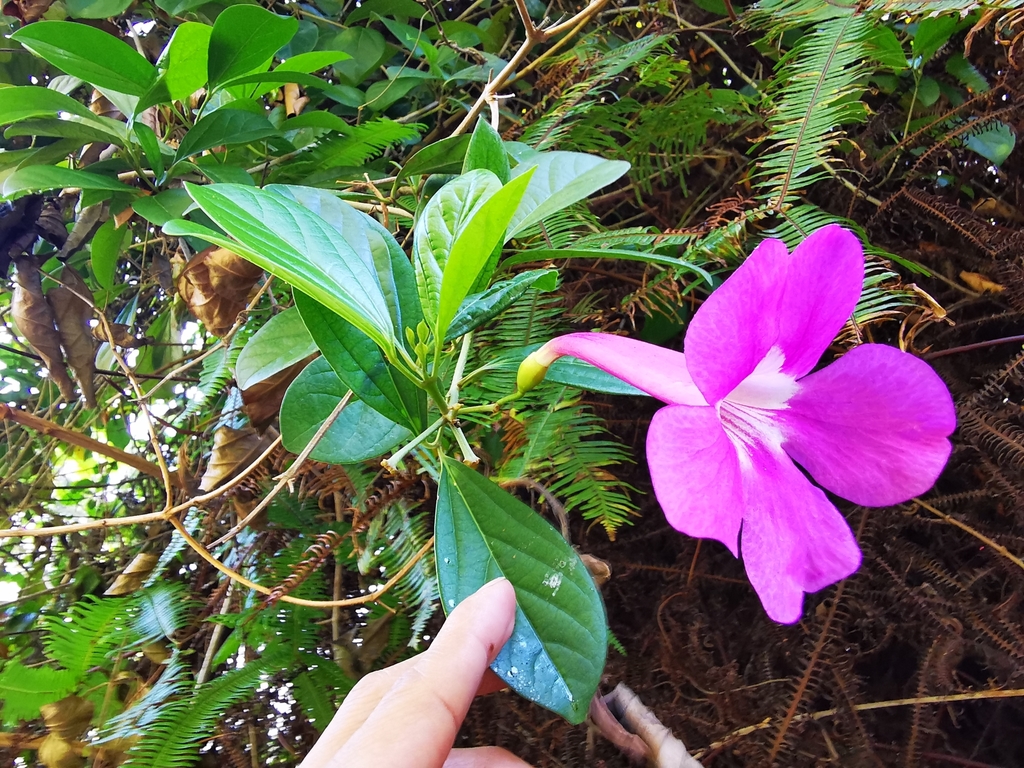
Purple funnel vine
Bignonia magnifica
Bignonia magnifica, known as glowvine, is a species in the trumpet-vine family, Bignoniaceae. Originally described in the genus Bignonia in 1879, it was later transferred to the monotypic genus Saritaea as the sole species Saritaea magnifica, but has since been restored to Bignonia. It is native to Panama and northern South America (Colombia, Ecuador and Venezuela), but has been introduced elsewhere.
From the article Bignonia magnifica on Wikipedia (CC BY-SA), quoted section by section
Description
The stems are almost round in cross-section, and are marked with longitudinal stripes. The 10 cm leaves have two leaflets and a further two leaflet-like appendages at the base of the leaf stalk, plus a tendril at the tip. The leaves are smooth and leathery. The plant is a showy-flowering, evergreen tropical climber. The large heads of rosy mauve to purple coloured, bell-shaped flowers 8 cm long with hairy yellow throat, borne at the ends of the branches, often appear year-round. When in flower, it is regarded as one of the outstanding climbers of the world. In its native territory, the nectar is collected by the male bees of the tropical genus Euglossa, which pollinate the flowers by brushing against the pollen and transferring it to the stigma. The fruit is a long, flattened, capsule containing two-winged seeds.
How it is grown
The plant needs a warm-subtropical or tropical climate to be seen at its best, as well as well-drained moisture-retaining soil with much humus. Propagated from seed and cuttings.
Wikipedia: “Cultivation”
Where it lives
Recorded sightings
—
geo-referenced records in GBIF, from museums, herbaria and field observers.
Drag the globe to turn it. Dots are where records exist, not a range map; darker means more records.
In the stacks
Searching the stacks…
Every page naming Bignonia magnifica in the Biodiversity Heritage Library →
This page is assembled live from iNaturalist, GBIF, Wikipedia, the Source Library and the Internet Archive. It is not yet part of the hand-edited codex. iNaturalist taxon 344281.