- Animals
- ›Molluscs
- ›Bivalves
- ›Autobranchia
- ›Heteroconchia
- ›Euheterodonta
- ›Imparidentia
- ›Venerids
- ›Veneroidea
- ›Venus Clams
- ›Tapetinae
- ›Ruditapes
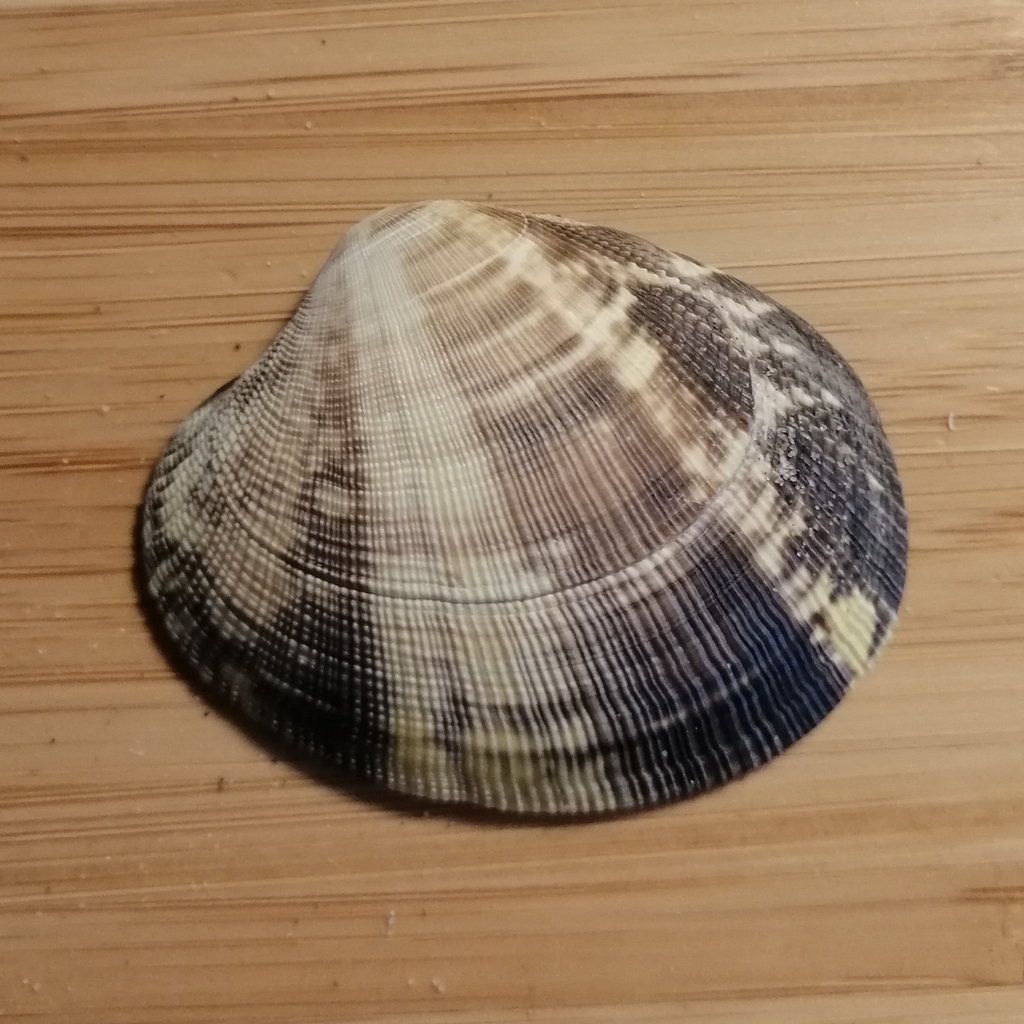
Japanese Littleneck
Ruditapes philippinarum
Ruditapes philippinarum, the Manila clam, is an edible species of saltwater clam in the family Veneridae, the Venus clams. Common names include Manila clam, Japanese littleneck clam, Japanese cockle, and Japanese carpet shell. In China, it is known as geli. In Japan, it is known as asari. In Korea, it is known as bajirak.
The clam is commercially harvested, and is the second most important bivalve grown in aquaculture worldwide.
From the article Ruditapes philippinarum on Wikipedia (CC BY-SA), quoted section by section
Description
The shell of Ruditapes philippinarum is elongate, oval, and sculptured with radiating ribs. It is generally 40 to 57 millimeters wide, with a maximum width of 79 millimeters.
Range & habitat
This clam is native to the coasts of the Indian, Philippines and Pacific Oceans from Pakistan and India north to China, Japan, Korea and the Kuril Islands. It has an extensive nonnative distribution, having been introduced accidentally and purposely as a commercially harvested edible clam. It is now permanently established in coastal ecosystems in many parts of the world.
Wikipedia: “Distribution”
What it does
This clam may become sexually mature in its first year of life, when it reaches about 15 millimeters in width, especially in warmer areas such as Hawaii. In cooler areas, it begins breeding at older ages and larger sizes. In warmer regions, it spawns year-round, but only in the summer in cooler areas. The fecundity of the species increases with size, a 40-millimeter female producing up to 2.4 million eggs.
Wikipedia: “Biology and ecology”
At the table
The clam is frequently eaten in Asia, especially in the Philippines, Korea, and Japan, where they are often used in soups and noodle dishes.
Wikipedia: “Culinary uses”
Where it lives
Recorded sightings
—
geo-referenced records in GBIF, from museums, herbaria and field observers.
Drag the globe to turn it. Dots are where records exist, not a range map; darker means more records.
In the stacks
Searching the stacks…
Every page naming Ruditapes philippinarum in the Biodiversity Heritage Library →
This page is assembled live from iNaturalist, GBIF, Wikipedia, the Source Library and the Internet Archive. It is not yet part of the hand-edited codex. iNaturalist taxon 343269.