- Plants
- ›Vascular Plants
- ›flowering plants
- ›Dicots
- ›nightshades, bindweeds, gooseweeds, and allies
- ›nightshade family
- ›nightshades and allies
- ›nightshades and jaltomatas
- ›Solanum
- ›Leptostemonum
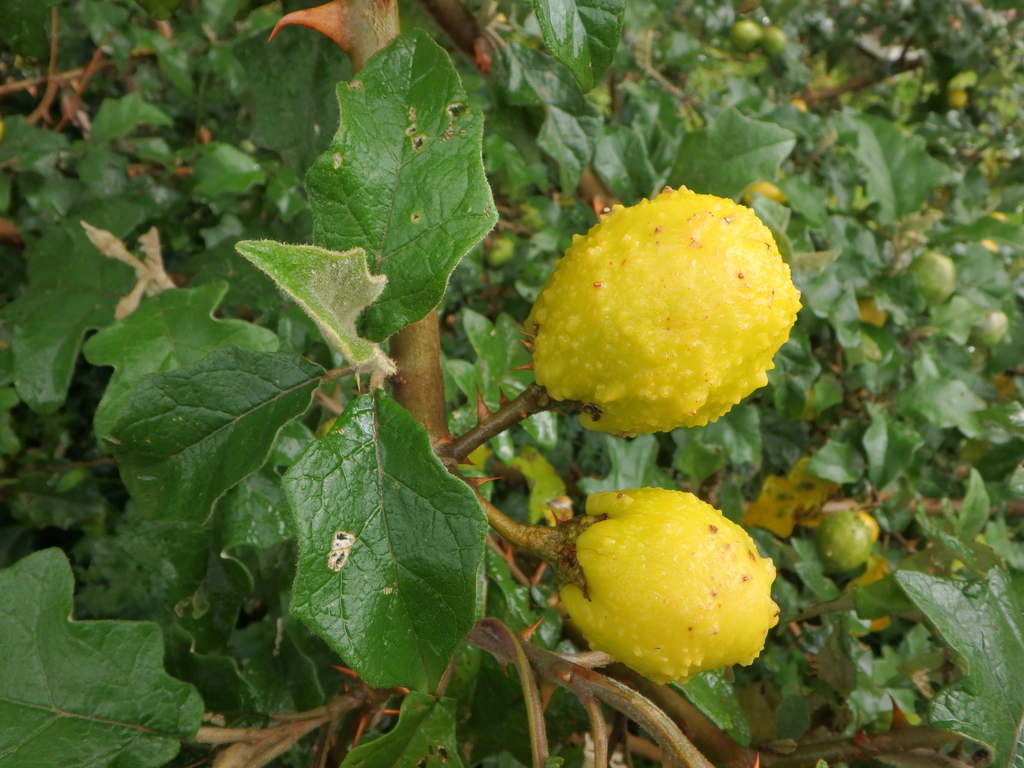
soda-apple nightshade
Solanum aculeastrum
Solanum aculeastrum is commonly known as soda apple, sodaapple nightshade, goat apple, poison apple, or more ambiguously as "bitter-apple". It is a poisonous nightshade species from Africa and only distantly related to true apples. The term "soda apple" probably derives from "Sodom apple", modified due to the fruit's detergent properties.
From the article Solanum aculeastrum on Wikipedia (CC BY-SA), quoted section by section
Description
It is a shrub or small tree native to tropical Africa East to South Africa, in a wide range of soil, terrain, and climatic conditions. It is highly branched and reaches 1–5 m high, with numerous sharp, hooked, brown thorns. The leaves are ovate, up to 15 cm long and 13 cm broad, with lobed margins and downy undersides. It flowers (in South Africa) from September to July, peaking from November to March. The petals are white to pale violet surrounding the ovary, the flower also has a bitter, sour smell. These yield to fruit from April to January, peaking in June and November. These smooth, round berries are 6 cm in diameter and fade from green to yellow as they ripen. These berries contain high levels of the poisonous alkaloid solanine. The species name aculeastrum refers to the thorns that adorn most parts of the shrub.
At the table
Because of its dense growth and prickly nature, soda apple is used as a hedge and living barrier for containing livestock. It is often used as a soap replacement, as it is high in saponin. Traditional Zulu practices use the fruit - fresh, boiled, or charred - in herbal medicine to treat a wide variety of afflictions, including cancer, toothaches, and ringworm. The Taita tribe of southern Kenya use the ripe yellow fruit to treat paronychia. The roots are chewed and, the sap ingested to alleviate stomach aches.
Wikipedia: “Uses”
Where it lives
Recorded sightings
—
geo-referenced records in GBIF, from museums, herbaria and field observers.
Drag the globe to turn it. Dots are where records exist, not a range map; darker means more records.
In the stacks
Searching the stacks…
Every page naming Solanum aculeastrum in the Biodiversity Heritage Library →
This page is assembled live from iNaturalist, GBIF, Wikipedia, the Source Library and the Internet Archive. It is not yet part of the hand-edited codex. iNaturalist taxon 340308.