- Plants
- ›Vascular Plants
- ›flowering plants
- ›Dicots
- ›Soapberries, Cashews, Mahoganies, and Allies
- ›citrus family
- ›Zanthoxyloideae
- ›Zanthoxylum
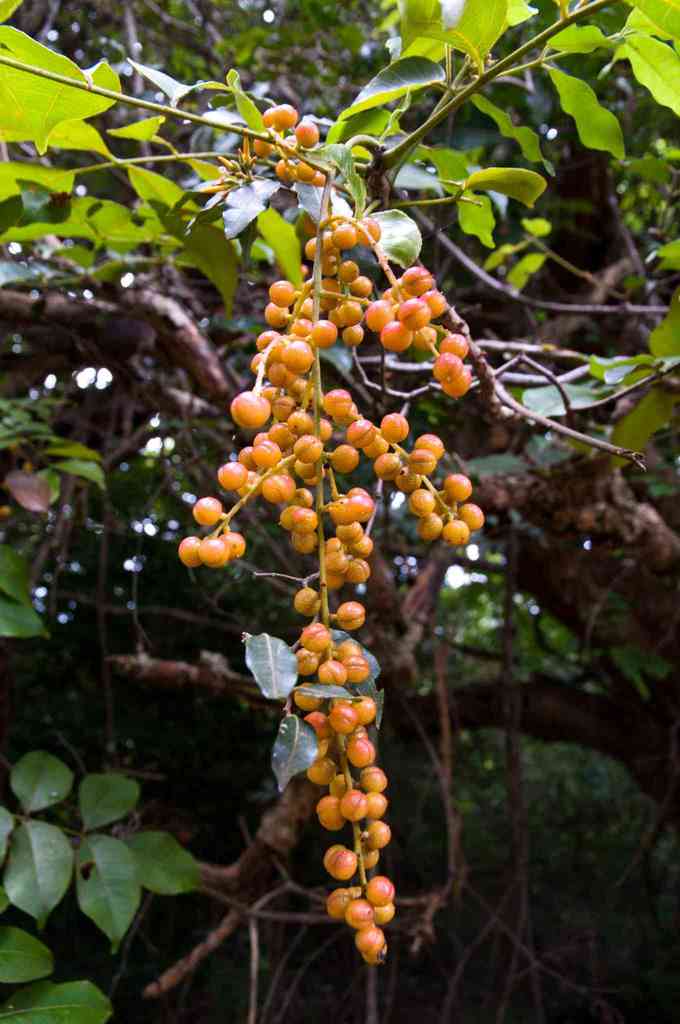
sand knobwood
Zanthoxylum leprieurii
Zanthoxylum leprieurii is a low branching medium-sized tree of the Rutaceae family. It can reach 24 m (79 ft) in height and up to 40 cm (16 in) in diameter. Some parts of the plant are used in African folk medicine.
From the article Zanthoxylum leprieurii on Wikipedia (CC BY-SA), quoted section by section
Description
Stems often have conical, woody prickle-bearing protuberances up to 6 cm (2.4 in) long. Leaves alternate, and are imparipinnately compound, with 8-17 leaflets. Leaflets are 15-55 cm (22 in) long.
Range & habitat
This plant spans Tropical Africa, from Senegal to Ethiopia and reaches Mozambique.
Wikipedia: “Distribution”
At the table
Extracts from the stem and root bark have applications in traditional healing practices. They are used as part of a decoction to treat venereal diseases, body pain, dysentery, urinary infections, male impotence and intestinal worms. Leaf extracts are used as a topical wound treatment, kidney pain arthritis, bleeding gums and sores. Though not known for its durability, its wood is used to build canoes and boats, drums, crates and boxes.
== References ==
Wikipedia: “Uses”
Where it lives
Recorded sightings
—
geo-referenced records in GBIF, from museums, herbaria and field observers.
Drag the globe to turn it. Dots are where records exist, not a range map; darker means more records.
In the stacks
Searching the stacks…
Every page naming Zanthoxylum leprieurii in the Biodiversity Heritage Library →
This page is assembled live from iNaturalist, GBIF, Wikipedia, the Source Library and the Internet Archive. It is not yet part of the hand-edited codex. iNaturalist taxon 340183.