- Plants
- ›Vascular Plants
- ›flowering plants
- ›Dicots
- ›myrtles, evening primroses, and allies
- ›myrtle family
- ›Myrtoideae
- ›Myrteae
- ›Eugeniinae
- ›Eugenia
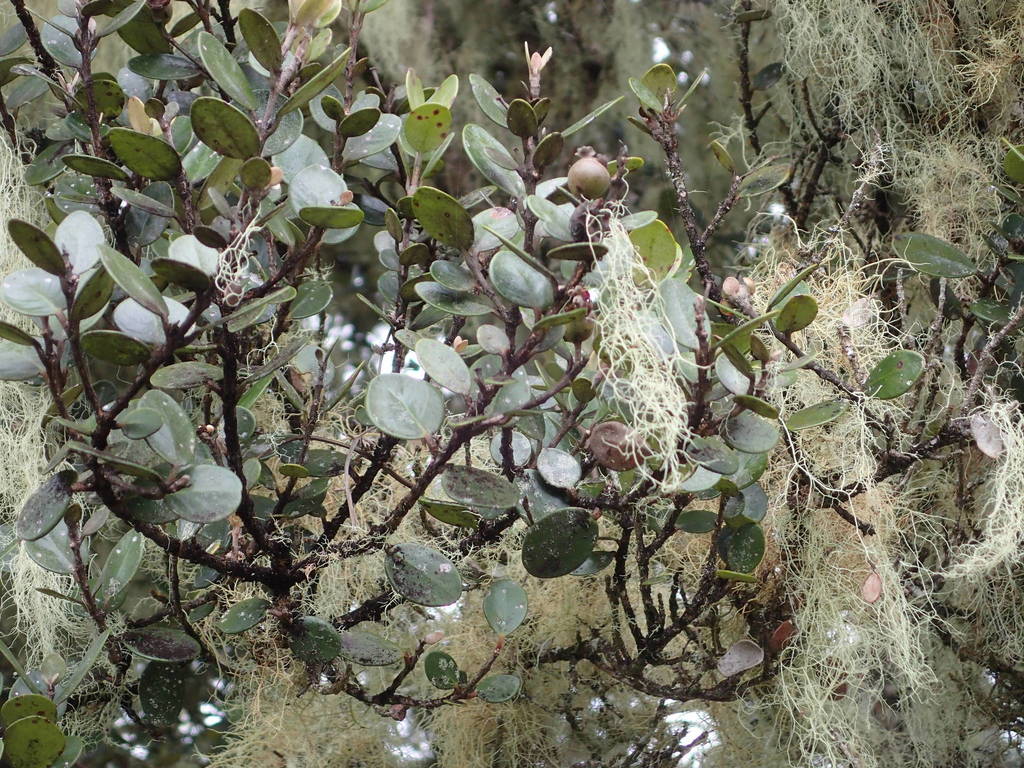
Eugenia buxifolia
Eugenia is a genus of flowering plants in the myrtle family Myrtaceae. It has a worldwide, although highly uneven, distribution in tropical and subtropical regions. The bulk of the approximately 1,100 species occur in the New World tropics, especially in the eastern Brazil's northern Andes, the Caribbean, and the Atlantic Forest (coastal forests). Other centers of diversity include New Caledonia and Madagascar. Many species in the Old World have received a new classification into the genus Syzygium.
All species are woody evergreen trees and shrubs. Several are grown as ornamental plants for their attractive glossy foliage, and a few produce edible fruit that are eaten fresh or used in jams and jellies.
From the article Eugenia on Wikipedia (CC BY-SA), quoted section by section
What it does
Eugenia species are sometimes used as food plants by the larvae of hepialid moths of the genera Aenetus (including A. splendens) and Endoclita (including E. damor and E. malabaricus). Aenetus species burrow horizontally into the trunk then vertically down. Other Lepidoptera larvae which feed on Eugenia include Eupseudosoma aberrans and the snowy eupseudosoma.
== References ==
Wikipedia: “Ecology”
Where it lives
Recorded sightings
—
geo-referenced records in GBIF, from museums, herbaria and field observers.
Drag the globe to turn it. Dots are where records exist, not a range map; darker means more records.
In the stacks
Searching the stacks…
Every page naming Eugenia buxifolia in the Biodiversity Heritage Library →
This page is assembled live from iNaturalist, GBIF, Wikipedia, the Source Library and the Internet Archive. It is not yet part of the hand-edited codex. iNaturalist taxon 316768.