- Plants
- ›Vascular Plants
- ›flowering plants
- ›Dicots
- ›Nances, Willows, and Allies
- ›Passionfruit Family
- ›Passifloroideae
- ›Passifloreae
- ›Passiflora
- ›Decaloba
- ›Cieca
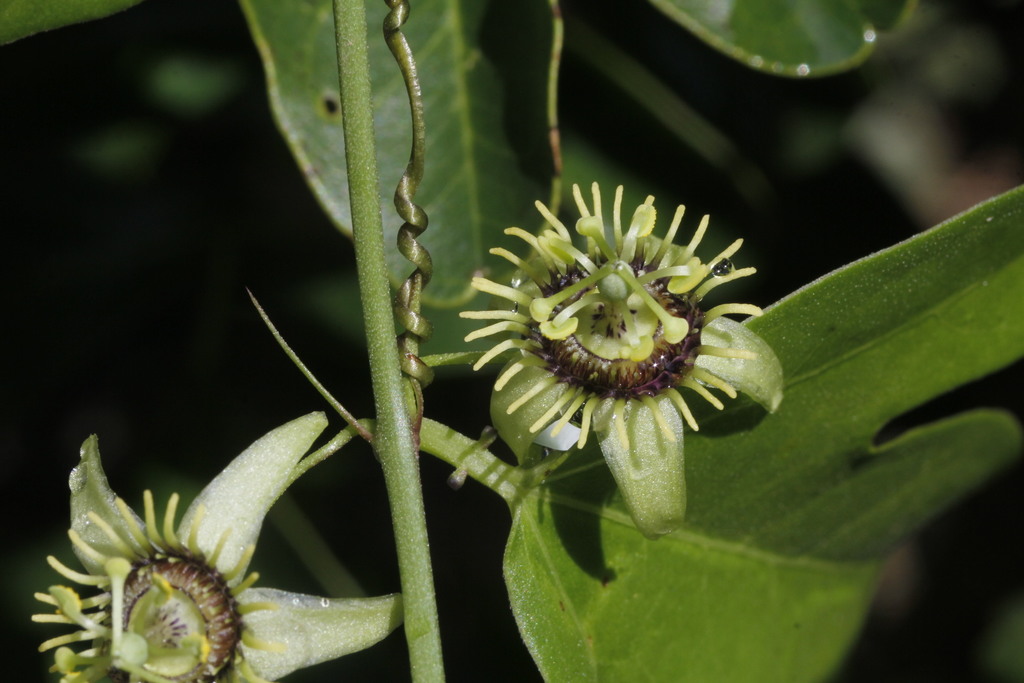
corkystem passionvine
Passiflora pallida
Passiflora suberosa is a species of passionflower that is native to the Americas. It is commonly known as corkystem passionflower due to the corkiness of older stems. Other common names include corky passion vine, cork-bark passion flower, corkstem passionflower and corky passionfruit. In Latin America it is called Meloncillo. It is possibly also cryptic and have multiple species in one.
From the article Passiflora suberosa on Wikipedia (CC BY-SA), quoted section by section
Range & habitat
Its range stretches from Florida and the Lower Rio Grande Valley of Texas in the United States south through Mexico, Central America, and the Caribbean to South America. In 1909, it was introduced in Polynesia and Australia. It is extremely prolific (up to 1000 seeds per square meter), smothering any vegetation it grows on, including trees. In New Caledonia, it is prohibited to introduce the species into the wild.
Wikipedia: “Range”
What it does
Many clones of the plant are self-pollinating. In winter, the plant is hardy down to temperatures around 7 °C. It can be propagated by sowing or cuttings. This species is a host plant for the caterpillars of the Gulf fritillary (Agraulis vanillae), Julia heliconian (Dryas iulia), Mexican silverspot (Dione moneta), red postman (Heliconius erato), and zebra heliconian (Heliconius charithonia). It is a larval host plant for the glasswing butterfly (Acraea andromacha) in Australia.
Wikipedia: “Reproduction”
Where it lives
Recorded sightings
—
geo-referenced records in GBIF, from museums, herbaria and field observers.
Drag the globe to turn it. Dots are where records exist, not a range map; darker means more records.
In the stacks
Searching the stacks…
Every page naming Passiflora pallida in the Biodiversity Heritage Library →
This page is assembled live from iNaturalist, GBIF, Wikipedia, the Source Library and the Internet Archive. It is not yet part of the hand-edited codex. iNaturalist taxon 287170.