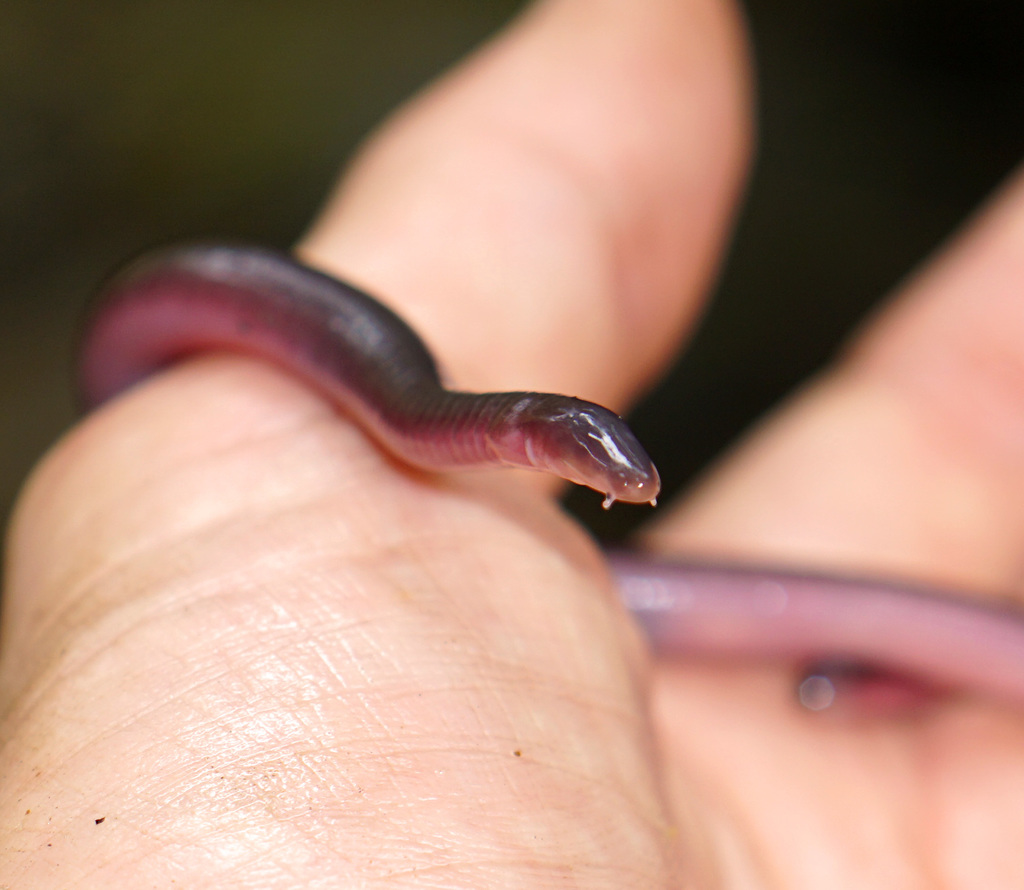
Kirk's Caecilian
Scolecomorphus kirkii
Scolecomorphus kirkii (common names: Kirk's caecilian, Lake Tanganyika caecilian) is a species of caecilian in the family Scolecomorphidae. It is known from southern Malawi east of the Shire River, northern Mozambique, and Tanzania (including the Nguru, Udzungwa and Uluguru Mountains); the known distribution is discontinuous but the species is expected to occur in the intervening areas.
From the article Scolecomorphus kirkii on Wikipedia (CC BY-SA), quoted section by section
Description
Adults measure 215–463 mm (8.5–18.2 in) in snout–vent length; it is the largest Scolecomorphus species. There are 130–152 primary annuli (ring-shaped folds). The dorsal colouration is lavender-grey and extends to the sides such that it encroaches the flesh or cream coloured mid-ventral surfaces. It is possible that the colouration is aposematic. Scolecomorphus kirkii is assumed to be viviparous and not to depend on bodies of water in its reproduction. It is an efficient burrower that feeds on arthropods. Among its predators is the fossorial snake Atractaspis aterrima, based on a S. kirkii individual found in the gut of this snake.
Range & habitat
Scolecomorphus kirkii is a soil-dwelling species that occurs in montane and submontane forests, generally at elevations above 1,000 m (3,300 ft) above sea level but sometimes down to 500 m (1,600 ft) asl. It can also live in secondary habitats like fruit gardens and small-holder agricultural areas. It is locally abundant. It can probably suffer from habitat disturbance and conversion caused by deforestation and agricultural intensification, although it is not known whether these constitute significant threats. It has been recorded in pet trade but only rarely. The International Union for Conservation of Nature (IUCN) has assessed it as of "Least Concern".
== References ==
Wikipedia: “Habitat and conservation”
In human culture
The specific name kirkii refers to Sir John Kirk, a Scottish diplomat, naturalist, and explorer.
Wikipedia: “Etymology”
Listen
Looking for field recordings…
Where it lives
Recorded sightings
—
geo-referenced records in GBIF, from museums, herbaria and field observers.
Drag the globe to turn it. Dots are where records exist, not a range map; darker means more records.
In the stacks
Searching the stacks…
Every page naming Scolecomorphus kirkii in the Biodiversity Heritage Library →
This page is assembled live from iNaturalist, GBIF, Wikipedia, the Source Library and the Internet Archive. It is not yet part of the hand-edited codex. iNaturalist taxon 28208.