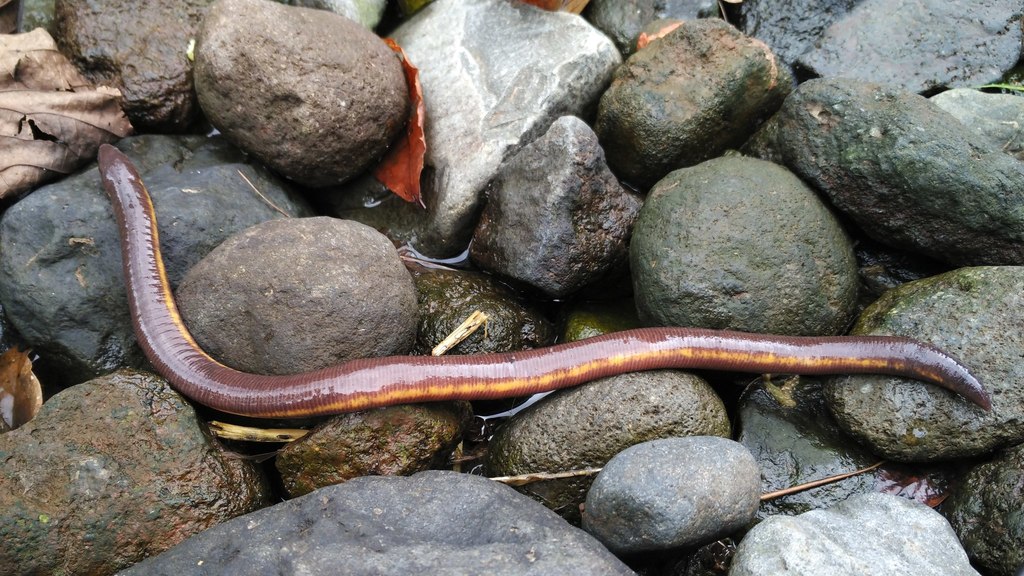
Marsh Caecilian
Ichthyophis hypocyaneus
Ichthyophis hypocyaneus, the Javan caecilian or marsh caecilian, is a species of amphibian in the family Ichthyophiidae of caecilians, endemic to Java, Indonesia. Until its rediscovery in 2000, it was known only from the 1827 type specimen.
From the article Ichthyophis hypocyaneus on Wikipedia (CC BY-SA), quoted section by section
Range & habitat
Ichthyophis hypocyaneus is so far known from four sites on Java Island, Indonesia, and was originally described in Banten in West Java. The species was thought to be extinct but rediscovered through a second observation in Pekalongan. The third sighting of the species was in Bodogol, at the edge of Gunung Gede Pangrango National Park (Kusrini 2007), and the fourth sighting in Gunung Halimun-Salak National Park.
Wikipedia: “Distribution and habitat”
What it does
Ichthyophis caecilians are oviparous and present in a broad range of terrestrial microhabitats, ranging from primary forests to plantations. The breeding season overlaps with the rainy season, when Ichthyophis caecilians are usually found in epigeic microhabitats. Egg deposition starts at the onset of the monsoon with metamorphosis taking place before the end of the dry season.
== References ==
Wikipedia: “Ecology”
Listen
Looking for field recordings…
Where it lives
Recorded sightings
—
geo-referenced records in GBIF, from museums, herbaria and field observers.
Drag the globe to turn it. Dots are where records exist, not a range map; darker means more records.
In the stacks
Searching the stacks…
Every page naming Ichthyophis hypocyaneus in the Biodiversity Heritage Library →
This page is assembled live from iNaturalist, GBIF, Wikipedia, the Source Library and the Internet Archive. It is not yet part of the hand-edited codex. iNaturalist taxon 28105.