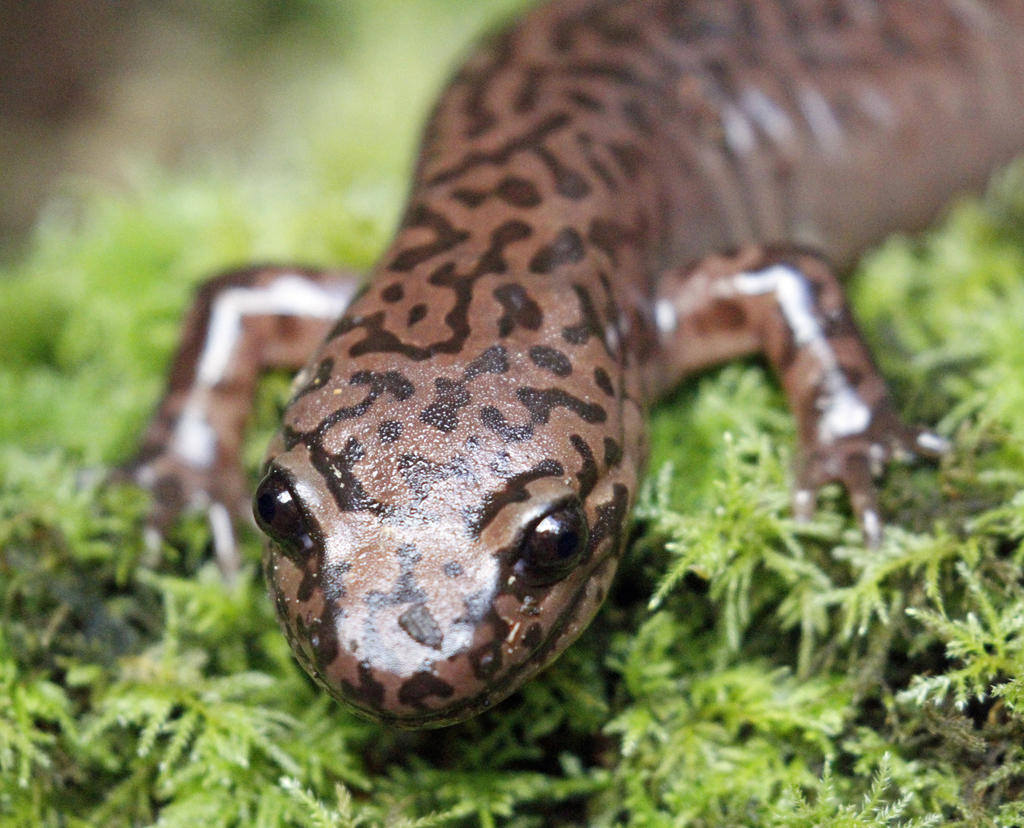
Mole Salamanders
Ambystomatidae
Ambystomatidae is a family of salamanders belonging to the Suborder Salamandroidea in the class Amphibia. It contains two genera, Ambystoma (the mole salamanders) and Dicamptodon (the Pacific giant salamanders). Ambystoma contains 32 species and are distributed widely across North America, while Dicamptodon contains four species restricted to the Pacific Northwest. These salamanders are mostly terrestrial and eat invertebrates, although some species are known to eat smaller salamanders. They can be found throughout the US and some areas of Canada in damp forests or plains. This family contains some of the largest terrestrial salamanders in the world, the tiger salamander and the coastal giant salamander. Some species are toxic and can secrete poison from their bodies as protection against predators or infraspecific competition. Neoteny has been observed in several species in Ambystomatidae, and some of them like the axolotl live all of their lives under water in their larval stage.
2 branches of this family, most-observed first · about 36 known species
See this branch on the Wheel of Life →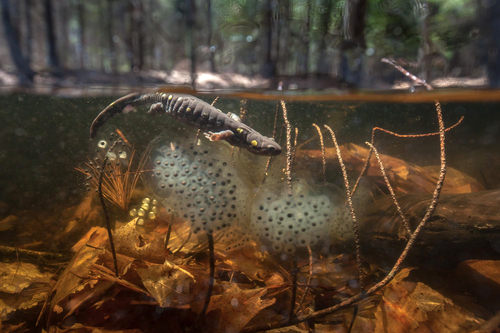

Where it lives
Recorded sightings
—
geo-referenced records in GBIF, from museums, herbaria and field observers.
Drag the globe to turn it. Dots are where records exist, not a range map; darker means more records.
In the stacks
Searching the stacks…
Every page naming Ambystomatidae in the Biodiversity Heritage Library →
This page is assembled live from iNaturalist, GBIF, Wikipedia, the Source Library and the Internet Archive. It is not yet part of the hand-edited codex. iNaturalist taxon 26720.