- Animals
- ›Chordates
- ›Vertebrates
- ›Amphibians
- ›Frogs and Toads
- ›Australian Ground Frogs
- ›Australian Ground Frogs
- ›Metacrinia
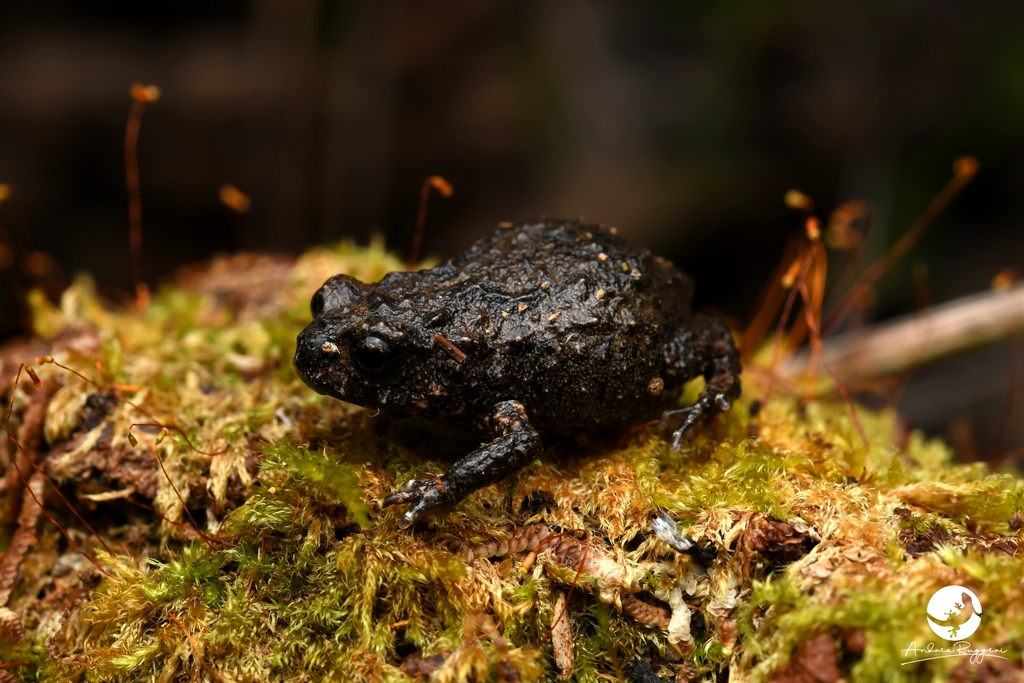
Forest Toadlet
Metacrinia nichollsi
Metacrinia is a genus of frog in the family Myobatrachidae. It is monotypic, being represented by the single species, Metacrinia nichollsi, commonly known as the Forest toadlet or Nicholls toadlet. It is endemic to Southwest Australia, occurring between Dunsborough and Albany.
From the article Metacrinia on Wikipedia (CC BY-SA), quoted section by section
Description
Metacrinia nichollsi is a squat frog with short limbs and reaches 25 millimetres (0.98 in) in length. The dorsal colouration is very dark brown or black occasionally with pink flecks. The ventral surface is grey, dark blue or black with white marbling. There are yellow or orange markings at the base of each arm and on the underside of the thighs and lower belly. The skin on the dorsum is warty and the belly is granular. The tympanum is visible and the fingers and toes are free of webbing. It is the only described species in the genus Metacrinia. The toadlet is poorly studied, but the diverse appearance of the toadlet suggests there may be more than one species.
What it does
This species is found amongst leaf litter, under stones and logs in karri and jarrah forests. Breeding occurs in late summer with most activity after rain. The males make a short "ark" similar to that of species in the genus Pseudophryne. 25–30 eggs are laid in damp ground cover where they develop directly without a larval (tadpole) stage. The species was assessed as Least Concern in 2004.
Wikipedia: “Ecology and behaviour”
Listen
Looking for field recordings…
Where it lives
Recorded sightings
—
geo-referenced records in GBIF, from museums, herbaria and field observers.
Drag the globe to turn it. Dots are where records exist, not a range map; darker means more records.
In the stacks
Searching the stacks…
Every page naming Metacrinia nichollsi in the Biodiversity Heritage Library →
This page is assembled live from iNaturalist, GBIF, Wikipedia, the Source Library and the Internet Archive. It is not yet part of the hand-edited codex. iNaturalist taxon 25304.