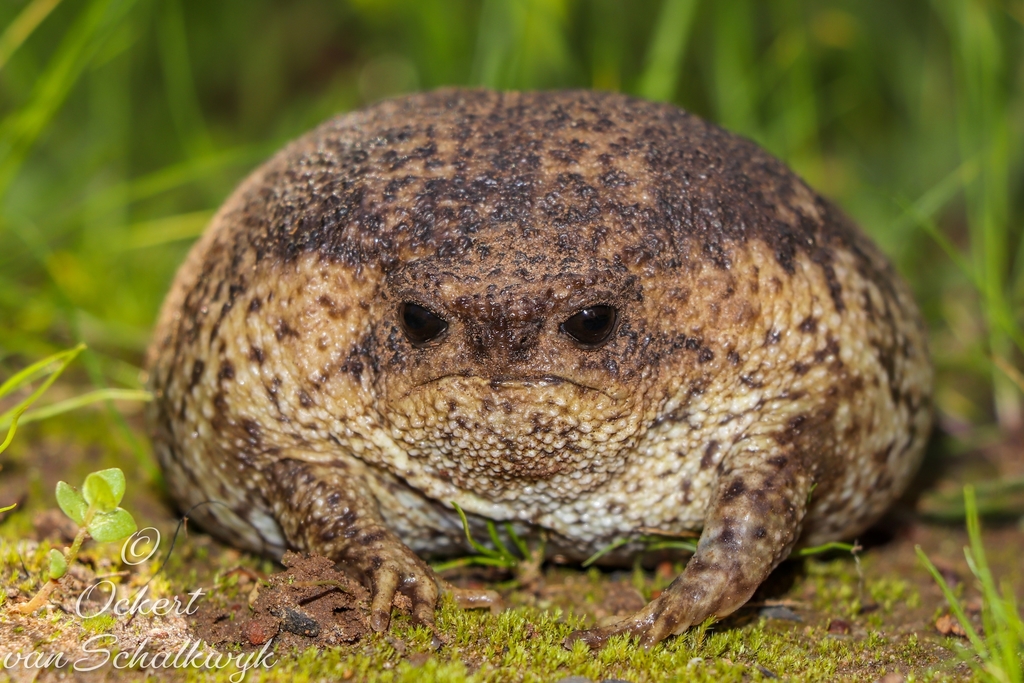
Giant Rain Frog
Breviceps gibbosus
The cape rain frog or giant rain frog (Breviceps gibbosus) is a species of frog in the family Brevicipitidae. Adults grow up to 45 mm in length. It was the first African frog species to be scientifically described by Carl Linnaeus in 1758, under the name Rana gibbosa. It is the most common and largest of rain frogs. The name "rain frog" that is applied to the genus refers to a belief that these frogs bring rain.
From the article Cape rain frog on Wikipedia (CC BY-SA), quoted section by section
Range & habitat
The species is endemic to South Africa, where it occurs in the far southwestern Cape, in Cape Town and northwards as far as Citrusdal. In this area it inhabits Mediterranean-type shrubby vegetation, known as fynbos, renosterveld, pastureland on farms, rural gardens, and even urban areas. It seems to adapt well to suburban gardens, but like most frog species it is vulnerable to herbicide poisons and domestic pets.
Wikipedia: “Distribution and habitat”
What it does
The Cape rain frog lives underground and usually emerges just before rains (whence it got its common name). It may also be seen in misty or damp conditions. Its burrowing provides a role in aerating soil in the southwestern Cape. It feeds on worms and small insects. When alarmed, it increases its apparent size by swallowing air; hence the species is given the Afrikaans common name of blaasoppie. As burrowing frogs, they have thick, muscular legs, which enable them to burrow for shelter. This species does not require open water to breed; in fact, it cannot swim and will drown if placed in water.
Wikipedia: “Ecology”
Listen
Looking for field recordings…
Where it lives
Recorded sightings
—
geo-referenced records in GBIF, from museums, herbaria and field observers.
Drag the globe to turn it. Dots are where records exist, not a range map; darker means more records.
In the stacks
Searching the stacks…
Every page naming Breviceps gibbosus in the Biodiversity Heritage Library →
This page is assembled live from iNaturalist, GBIF, Wikipedia, the Source Library and the Internet Archive. It is not yet part of the hand-edited codex. iNaturalist taxon 24999.