- Animals
- ›Chordates
- ›Vertebrates
- ›Amphibians
- ›Frogs and Toads
- ›Narrow-mouthed Frogs
- ›Asterophryinae
- ›Callulops
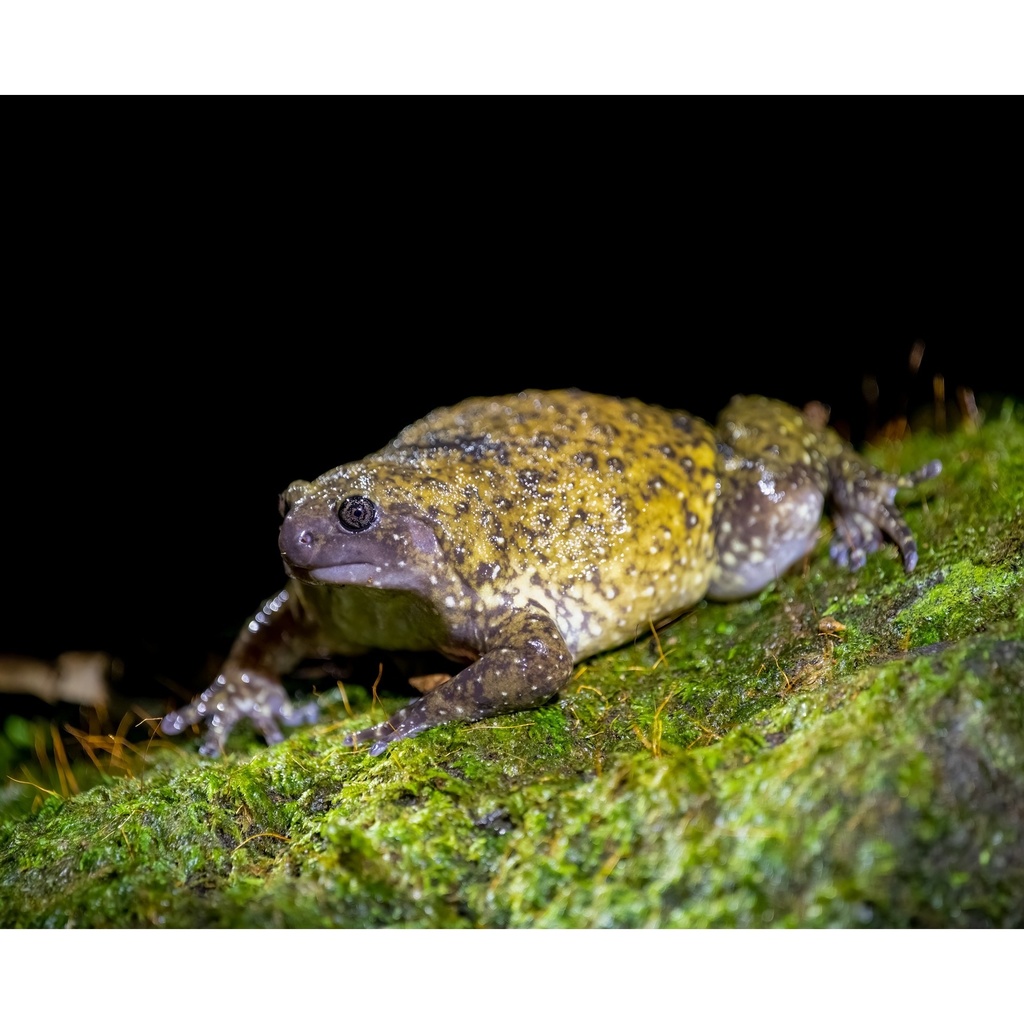
Doria's Callulops Frog
Callulops doriae
Callulops doriae is a species of frog in the family Microhylidae. It is endemic to Papua New Guinea and occurs in the eastern mainland Papua New Guinea and in Tagula Island, Louisiade Archipelago. It is the type species of the genus Callulops erected by George Albert Boulenger in 1888. Common name Doria's callulops frog has been coined for this species.
From the article Callulops doriae on Wikipedia (CC BY-SA), quoted section by section
Description
Callulops doriae are relatively large frogs that can reach 100 mm (3.9 in) in snout–vent length. The dorsal surfaces are verrucous, light brown, and have numerous blackish spots, each bearing a central white cap.
Range & habitat
This species lives on the forest floor in rainforests at elevations up to 1,520 m (4,990 ft) above sea level. Males call from low trees and rock crevices. Development is probably direct, without a free-living larval stage. Callulops doriae is a widespread but uncommon species. No major threats to it have been identified. It occurs in a few protected areas.
== References ==
Wikipedia: “Habitat and conservation”
Listen
Looking for field recordings…
Where it lives
Recorded sightings
—
geo-referenced records in GBIF, from museums, herbaria and field observers.
Drag the globe to turn it. Dots are where records exist, not a range map; darker means more records.
In the stacks
Searching the stacks…
Every page naming Callulops doriae in the Biodiversity Heritage Library →
This page is assembled live from iNaturalist, GBIF, Wikipedia, the Source Library and the Internet Archive. It is not yet part of the hand-edited codex. iNaturalist taxon 24749.