- Animals
- ›Chordates
- ›Vertebrates
- ›Amphibians
- ›Frogs and Toads
- ›African Reed Frogs
- ›Typical Reed Frogs
- ›Opisthothylax
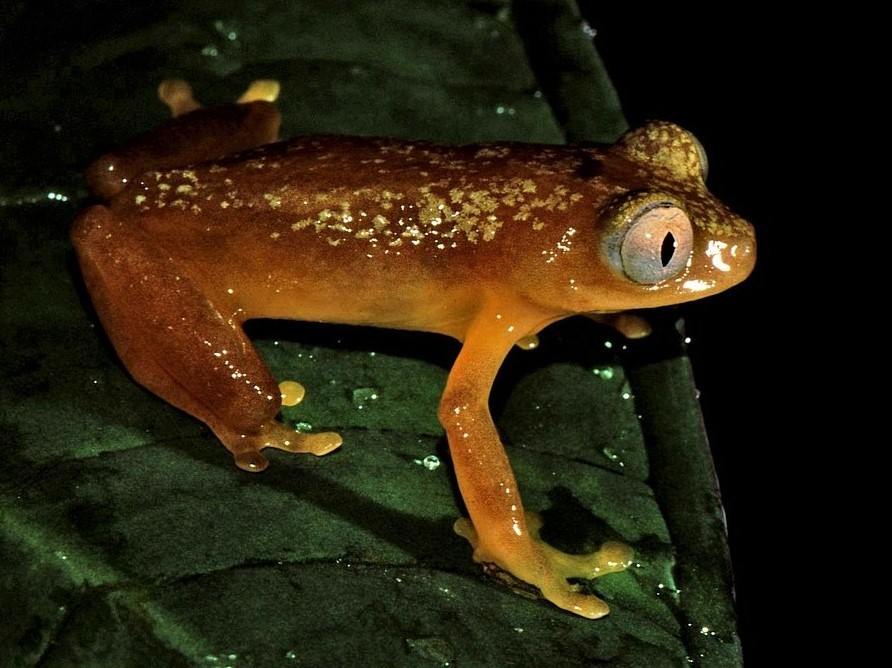
Gray-eyed Frog
Opisthothylax immaculatus
Opisthothylax is a monotypic frog genus in the family Hyperoliidae. The sole species is Opisthothylax immaculatus, also known as the gray-eyed frog . It is found in southern Nigeria, Cameroon, Equatorial Guinea, Gabon, western Republic of Congo, and southwestern Democratic Republic of the Congo. It might also be present in the Cabinda Enclave of Angola and in the Central African Republic.
From the article Opisthothylax on Wikipedia (CC BY-SA), quoted section by section
Description
Adult males measure 30–33 mm (1.2–1.3 in) in snout–vent length. The dorsal colouration is reddish-brown or orange to yellowish. In most individuals, there are two small, dark occipital spots. The ventral surfaces of the body and limbs are light yellow. The pupil is vertical and the iris light golden yellow. There is no visible tympanum. The skin is warty. The toe discs are expanded. Males have a large gular flap and a non-distensible vocal sac.
Range & habitat
Its natural habitats are closed-canopy, undisturbed rainforests. It is an arboreal frog found high up in the foliage. It lays its eggs in a foam nest attached to leaves above slow-flowing streams—the only species to do so within the family Hyperoliidae. The tadpoles drop to the water after hatching. Opisthothylax immaculatus is a widespread species, but its population density is low. Habitat loss is probably a threat to it. It occurs in the Korup National Park in Cameroon, probably also in other protected areas.
== References ==
Wikipedia: “Habitat and conservation”
Listen
Looking for field recordings…
Where it lives
Recorded sightings
—
geo-referenced records in GBIF, from museums, herbaria and field observers.
Drag the globe to turn it. Dots are where records exist, not a range map; darker means more records.
In the stacks
Searching the stacks…
Every page naming Opisthothylax immaculatus in the Biodiversity Heritage Library →
This page is assembled live from iNaturalist, GBIF, Wikipedia, the Source Library and the Internet Archive. It is not yet part of the hand-edited codex. iNaturalist taxon 23537.