- Animals
- ›Chordates
- ›Vertebrates
- ›Amphibians
- ›Frogs and Toads
- ›African Reed Frogs
- ›Typical Reed Frogs
- ›Afrixalus
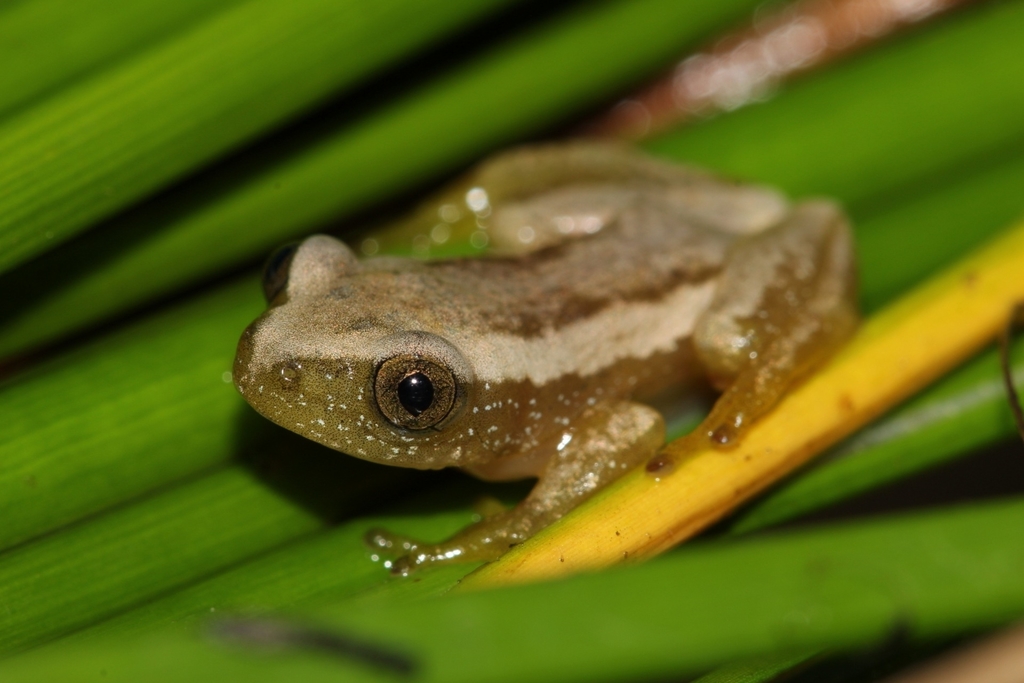
Knysna Spiny Reed Frog
Afrixalus knysnae
The Knysna banana frog, also called Knysna leaf-folding frog or Knysna spiny reed frog (Afrixalus knysnae), is a species of frog in the family Hyperoliidae endemic to South Africa.
From the article Knysna banana frog on Wikipedia (CC BY-SA), quoted section by section
Range & habitat
Its natural habitats are temperate forests, Mediterranean-type shrubby vegetation, freshwater marshes, intermittent freshwater marshes, arable land, water storage areas, and ponds. It is threatened by habitat loss. The Knysna banana frog is a species known from around 7 locations at low altitude (< 250 m asl) on the south coast of South Africa on either side of the border between the Eastern Cape and Western Cape provinces. To the extent of scientists knowledge we know that the occurrence rate is 1,756 km². The area of occupancy has not been formally calculated but is known to be declining as some sites (like Covie) are presumed lost as no adults or tadpoles have been found there for at least three years. Although some sites are pristine, others are threatened by alien vegetation. Banana frogs are native to South Africa (Eastern Cape Province, Western Cape Province). They live in coastal mosaic of vegetation types, including mountain fynbos heathland, and forest. The frogs breed in small dams and shallow semi-permanent water with much emergent vegetation and even in well vegetated ornamental garden ponds; it is suspected that this species requires high water quality for breeding. Habitat is declining due to encroachment by urban development, alien invasive vegetation and chemical pollution. Species in this genus deposit between 20 and 50 eggs on vegetation above the water. …
Wikipedia: “Habitat”
What it does
Adults of the species forage at night, when they pick insects from aquatic vegetation. Tadpoles eat vegetation within the body of water where they hatch.
Wikipedia: “Diet”
Listen
Looking for field recordings…
Where it lives
Recorded sightings
—
geo-referenced records in GBIF, from museums, herbaria and field observers.
Drag the globe to turn it. Dots are where records exist, not a range map; darker means more records.
In the stacks
Searching the stacks…
Every page naming Afrixalus knysnae in the Biodiversity Heritage Library →
This page is assembled live from iNaturalist, GBIF, Wikipedia, the Source Library and the Internet Archive. It is not yet part of the hand-edited codex. iNaturalist taxon 23457.