- Animals
- ›Chordates
- ›Vertebrates
- ›Amphibians
- ›Frogs and Toads
- ›African Reed Frogs
- ›Typical Reed Frogs
- ›Hyperolius
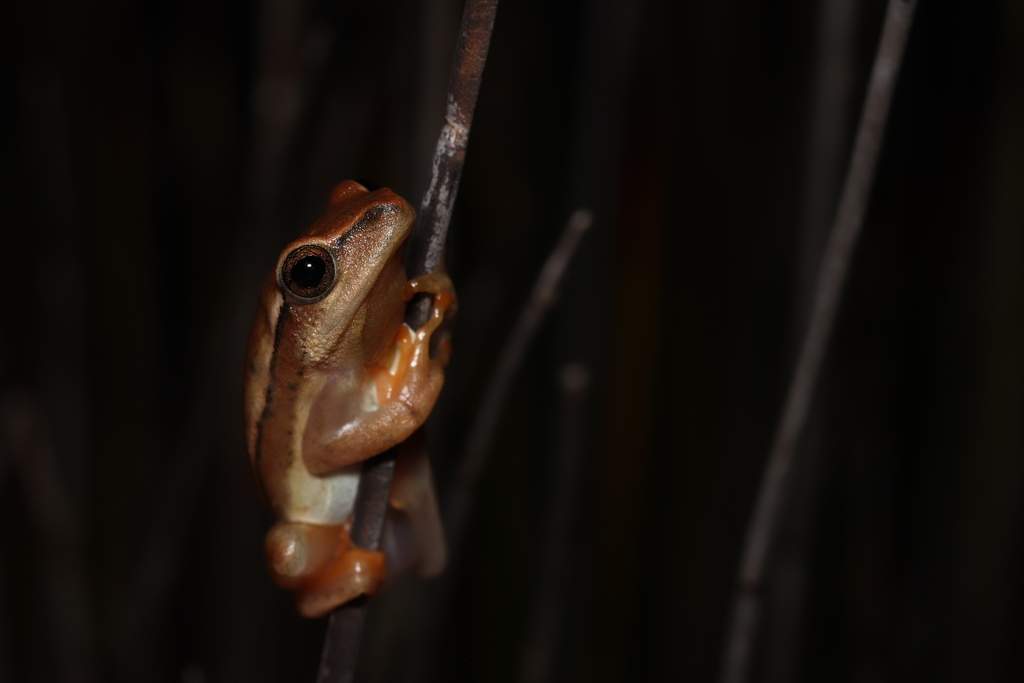
Arumlily Reed Frog
Hyperolius horstockii
The arum frog, arum lily reed frog, Horstock's arum-frog, arum lily frog, or Horstock's reed frog (Hyperolius horstockii) is a species of frog in the family Hyperoliidae. It is endemic to South Africa.
From the article Arum frog on Wikipedia (CC BY-SA), quoted section by section
Range & habitat
The arum frog is found in the southern coastal plain of South Africa from Cape Town in the Western Cape to Port Elizabeth in the Eastern Cape. Its natural habitats are Mediterranean-type shrubby vegetation, rivers, swamps, intermittent freshwater lakes, freshwater marshes, intermittent freshwater marshes, and ponds. It is frequently found lying at the bottom of arum lilies (Zantedeschia aethiopica), trying to catch pollinating insects. It is assessed as least concern but some populations are threatened by habitat loss through the invasion of alien vegetation and fire. Contrary to popular belief it is not threatened by the collection and sale of arum lilies.
Wikipedia: “Distribution and habitat”
What it does
These frogs are sometimes found in arum lily flowers where they can change colour to perfectly match their surroundings. This makes them virtually invisible to predators, as well as to their insect prey. Their pale colour camouflages them in the white flowers, helped by hiding their bright orange feet and legs under their bodies during the day. Contrary to popular belief they do not use the pollen of the flowers to camouflage themselves. The breeding habitat of the arum frog includes large or small pans, dams, vleis and slow-flowing, quiet streams where there is sufficient emergent vegetation. Males usually call at night from elevated positions above water, normally in the emergent vegetation such as sedges, reeds, shrubs and grasses, although they may sometimes call from the pads of water lilies. The usually start calling just after sunset, but will call sporadically in the late afternoon on cloudy, rainy days. The arum frog occurs mostly in a winter rainfall region; however, its breeding season occurs over the spring and summer, in September–January. After mating the female lays clutches of 10–30 eggs which are attached to the submerged roots and stems of plants.
== References ==
Wikipedia: “Behaviour”
Listen
Looking for field recordings…
Where it lives
Recorded sightings
—
geo-referenced records in GBIF, from museums, herbaria and field observers.
Drag the globe to turn it. Dots are where records exist, not a range map; darker means more records.
In the stacks
Searching the stacks…
Every page naming Hyperolius horstockii in the Biodiversity Heritage Library →
This page is assembled live from iNaturalist, GBIF, Wikipedia, the Source Library and the Internet Archive. It is not yet part of the hand-edited codex. iNaturalist taxon 23370.