- Animals
- ›Chordates
- ›Vertebrates
- ›Amphibians
- ›Frogs and Toads
- ›Southern Frogs
- ›Leptodactylinae
- ›Leptodactylus
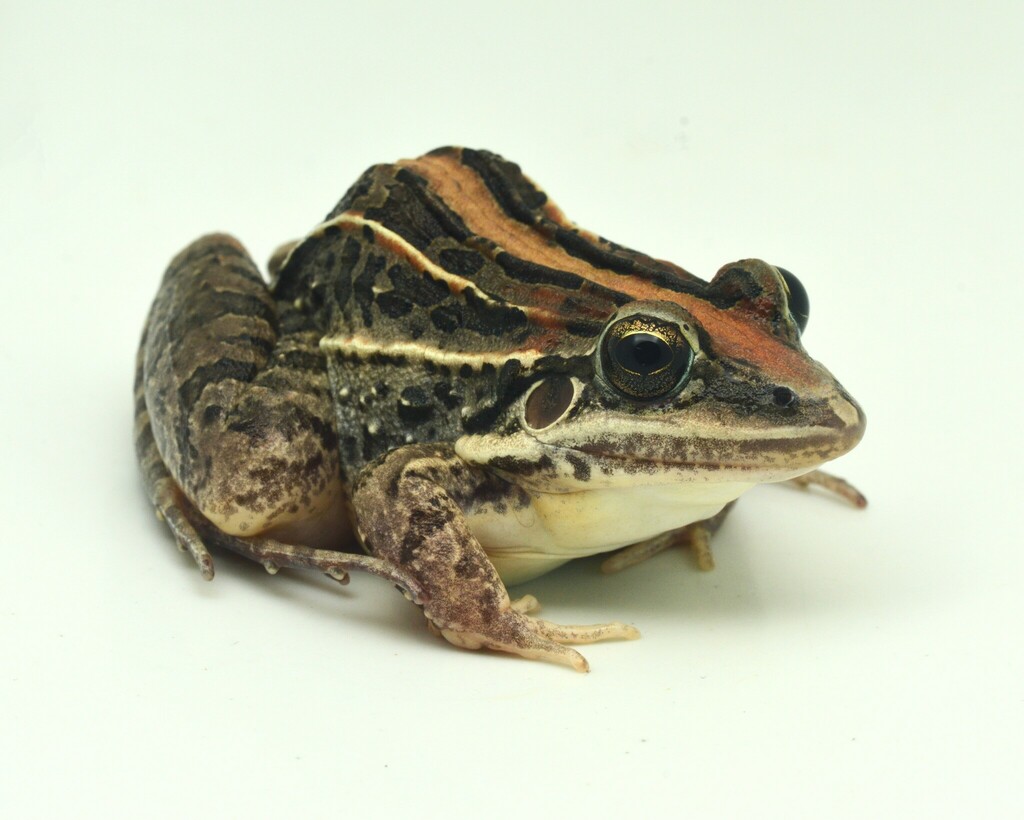
Whistling Grass Frog
Leptodactylus fuscus
Leptodactylus fuscus is a species of frog in the family Leptodactylidae. Its local name in Brazil is rã-assobiadora (lit. 'whistling frog'). The English name rufous frog has been proposed by Frank & Ramus and is currently used by the IUCN. It is found in Argentina, Bolivia, Brazil, Colombia, French Guiana, Guyana, Panama, Paraguay, Peru, Suriname, Trinidad and Tobago, and Venezuela.
From the article Leptodactylus fuscus on Wikipedia (CC BY-SA), quoted section by section
Range & habitat
This frog lives in grassy places, marshes, urban areas, and degraded forests. Scientists observed the frog between 0 and 1750 meters above sea level. This frog has shown a strong tolerance to antropogenic disturbance. Scientists have reported the frog many protected places. In Brazil, about 17 percent of these frogs live in protected parks.
Wikipedia: “Habitat”
What it does
The male frogs call to the female frogs when it rains. The frog deposits eggs in burrows in wet areas and near lagoons. When rainwater floods the burrows, the larvae swim out into nearby bodies of water.
Wikipedia: “Reproduction”
Listen
Looking for field recordings…
Where it lives
Recorded sightings
—
geo-referenced records in GBIF, from museums, herbaria and field observers.
Drag the globe to turn it. Dots are where records exist, not a range map; darker means more records.
In the stacks
Searching the stacks…
Every page naming Leptodactylus fuscus in the Biodiversity Heritage Library →
This page is assembled live from iNaturalist, GBIF, Wikipedia, the Source Library and the Internet Archive. It is not yet part of the hand-edited codex. iNaturalist taxon 22973.