- Animals
- ›Chordates
- ›Vertebrates
- ›Amphibians
- ›Frogs and Toads
- ›Southern Frogs
- ›Leptodactylinae
- ›Leptodactylus
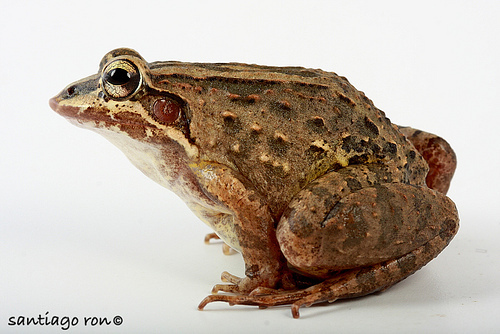
Pimocha White-lipped Frog
Leptodactylus labrosus
Leptodactylus labrosus is a species of frog in the family Leptodactylidae. It is found in Ecuador and Peru. Its natural habitats are subtropical or tropical dry forests, subtropical or tropical moist shrubland, rivers, freshwater marshes, intermittent freshwater marshes, and canals and ditches. It is threatened by habitat loss.
From the article Leptodactylus labrosus on Wikipedia (CC BY-SA), quoted section by section
Description
The adult male frog measures 49.2–61.5 mm in snout-vent length and the adult female frog measures 39.9–69.0 mm. This frog has prominent eyes that protrude from the head.
Range & habitat
This frog lives in dry habitats, such as scrubland, and in forests with at least some deciduous trees, though it has occasionally been found in evergreen forests, at the edges of forests, or on farms. This nocturnal, terrestrial frog has been found on the leaf litter and other microhabitats with some humidity. This frog is awake at night. Scientists observed the frog between 0 and 1300 meters above sea level. Scientists have seen the frog in protected places: Machalilla National Park, Manglares Churute National Park, and Mache Chindu National Park. They think it could also live in Parque Nacional Cerros de Amotape and El Angolo Game Preserve.
Wikipedia: “Habitat”
What it does
The adult frog eats terrestrial invertebrates, such as ants, earthworms, slugs, and caterpillars.
Wikipedia: “Diet”
Listen
Looking for field recordings…
Where it lives
Recorded sightings
—
geo-referenced records in GBIF, from museums, herbaria and field observers.
Drag the globe to turn it. Dots are where records exist, not a range map; darker means more records.
In the stacks
Searching the stacks…
Every page naming Leptodactylus labrosus in the Biodiversity Heritage Library →
This page is assembled live from iNaturalist, GBIF, Wikipedia, the Source Library and the Internet Archive. It is not yet part of the hand-edited codex. iNaturalist taxon 22954.