- Animals
- ›Chordates
- ›Vertebrates
- ›Amphibians
- ›Frogs and Toads
- ›Southern Frogs
- ›Leptodactylinae
- ›Leptodactylus
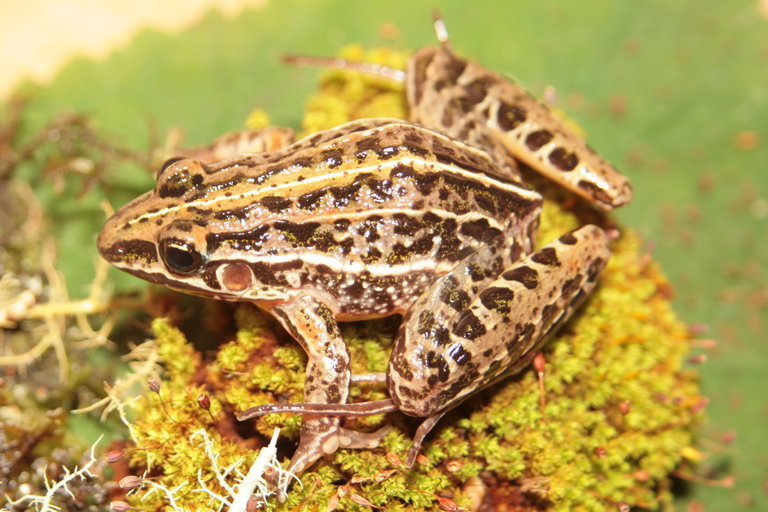
Campo Grande Frog
Leptodactylus furnarius
Leptodactylus furnarius is a species of frog in the family Leptodactylidae. It is found in Brazil and Uruguay. Its natural habitats are moist savanna, subtropical or tropical moist shrubland, subtropical or tropical high-altitude shrubland, subtropical or tropical seasonally wet or flooded lowland grassland, freshwater marshes, intermittent freshwater marshes, pastureland, plantations, rural gardens, and ponds. It is threatened by habitat loss.
From the article Leptodactylus furnarius on Wikipedia (CC BY-SA), quoted section by section
Range & habitat
This frog lives in Brazil's cerrado, Atlantic forest, and pampa biomes and in ponds, swamps, and grassy places throughout its range. This frog has shown some tolerance to anthropogenic disturbance. For example, people have found it on Eucalyptus tree farms. Scientists have observed the frog between 200 and 1364 meters above sea level. Scientists have reported the frog in some protected places, for example APA Corumbatai, Botucatu e Tejupa Perimetro Corumbatai, APA Jalapao, PARES do Jalapao, PARES Serra do Ouro Branco, PARNA da Chapada dos Veadeiros, PARNA Grande Sertao Veredas, RPPN Estancia Santa Ines, and RPPN Olavo Egydio Setubal.
Wikipedia: “Habitat”
What it does
The frog lays eggs underground. The tadpoles are washed into bodies of water after hatching.
Wikipedia: “Reproduction”
Listen
Looking for field recordings…
Where it lives
Recorded sightings
—
geo-referenced records in GBIF, from museums, herbaria and field observers.
Drag the globe to turn it. Dots are where records exist, not a range map; darker means more records.
In the stacks
Searching the stacks…
Every page naming Leptodactylus furnarius in the Biodiversity Heritage Library →
This page is assembled live from iNaturalist, GBIF, Wikipedia, the Source Library and the Internet Archive. It is not yet part of the hand-edited codex. iNaturalist taxon 22927.