- Animals
- ›Chordates
- ›Vertebrates
- ›Amphibians
- ›Frogs and Toads
- ›Escuerzos and Smooth-horned Frogs
- ›Proceratophrys
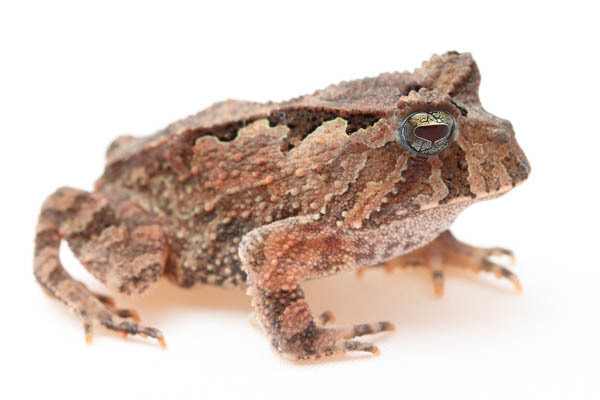
Goiás Smooth-horned Frog
Proceratophrys goyana
Proceratophrys goyana is a species of frog in the Odontophrynidae family. It is endemic to Brazil. Its natural habitats are moist savanna, subtropical or tropical moist shrubland, subtropical or tropical seasonally wet or flooded lowland grassland, subtropical or tropical high-altitude grassland, rivers, and intermittent rivers. It is threatened by habitat loss.
From the article Proceratophrys goyana on Wikipedia (CC BY-SA), quoted section by section
Range & habitat
This largely nocturnal frog lives in dry savanna and shrubland in the Cerrado biome. Scientists saw the frog between 300 and 1200 meters above sea level. Scientists have found the frog in some protected parks: Área de Proteção Ambiental João Leite, Floresta Nacional de Silvania, and Parque Nacional da Chapada dos Veadeiros.
Wikipedia: “Habitat”
What it does
The frog lays eggs in temporary and permanent rocky streams in savannas and in forests. The male frog either calls from the open or hides under a rock or in grass. Scientists believe the female frog places the spawn on rocks in streams and that the tadpoles eat algae and microorganisms from the bottom of the stream.
Wikipedia: “Reproduction”
Listen
Looking for field recordings…
Where it lives
Recorded sightings
—
geo-referenced records in GBIF, from museums, herbaria and field observers.
Drag the globe to turn it. Dots are where records exist, not a range map; darker means more records.
In the stacks
Searching the stacks…
Every page naming Proceratophrys goyana in the Biodiversity Heritage Library →
This page is assembled live from iNaturalist, GBIF, Wikipedia, the Source Library and the Internet Archive. It is not yet part of the hand-edited codex. iNaturalist taxon 22872.