- Animals
- ›Chordates
- ›Vertebrates
- ›Amphibians
- ›Frogs and Toads
- ›Escuerzos and Smooth-horned Frogs
- ›Odontophrynus
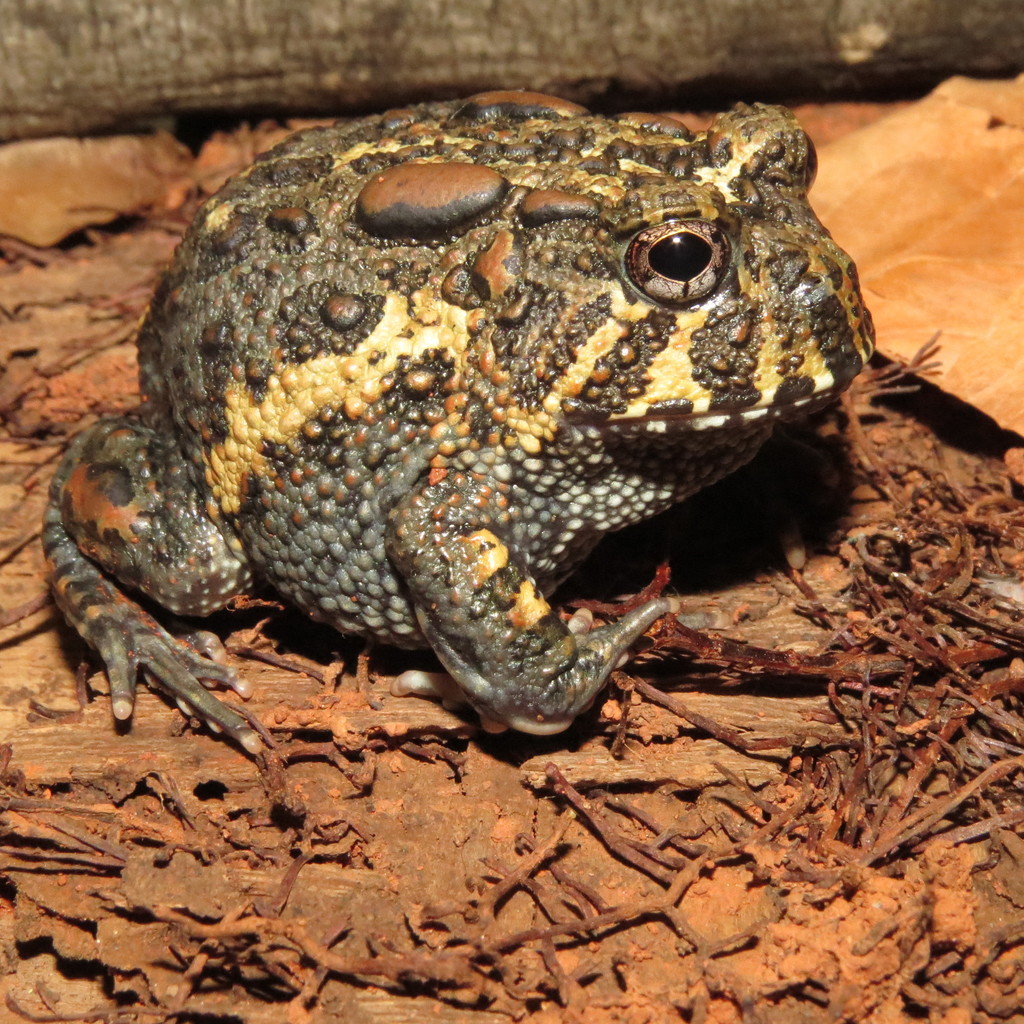
Rio Grande Escuerzo
Odontophrynus cultripes
Odontophrynus cultripes (common nane: Rio Grande escuerzo) is a species of frog in the Odontophrynidae family. It is endemic to southeastern Brazil and known from Minas Gerais, Goiás, and São Paulo states. It is mostly found at altitudes higher than 800 m (2,600 ft) above sea level.
From the article Odontophrynus cultripes on Wikipedia (CC BY-SA), quoted section by section
Description
Males measure 50–60 mm (2.0–2.4 in) and females 45–70 mm (1.8–2.8 in) in snout–vent length. The snout is vertical in profile. The parotoid glands are large and ovoid. The male advertisement call is composed of a single, multi-pulsed note. This frog has prominent eyes. There is no webbed skin on the front feet. Instead, it has a shovel-shaped front toe that it uses to burrow. The dorsal surfaces of the head, back, and legs are brown in color with lighter brown color on the head and some black on the legs and back. It has large, brown warts and yellow pigmentation on the flanks. The belly is yellow with some brown. The male frog has a brown throat.
Range & habitat
Odontophrynus cultripes is a fossorial species that occurs in open areas, forest edges, and suburban gardens. It is an abundant species that breeds explosively in temporary pools, including huyman-made ones. Although the IUCN classifies this species as least concern, habitat loss caused by infrastructure development, agricultural activities, and livestock rearing can negatively impact the species. The frog has been observed many protected parks: Área de Proteção Ambiental Corumbataí, Botucatu e Tejupa Perimetro Corumbataí, Área de Proteção Ambiental das Nascentes do Rio Vermelho, Área de Proteção Ambiental Jalapão, Área de Proteção Ambiental Serra do Lajeado, Área de Proteção Ambiental Sul RMBH, Parque Nacional da Chapada dos Veadeiros, and Parque Nacional de Itatiaia.
== References ==
Wikipedia: “Habitat and conservation”
Listen
Looking for field recordings…
Where it lives
Recorded sightings
—
geo-referenced records in GBIF, from museums, herbaria and field observers.
Drag the globe to turn it. Dots are where records exist, not a range map; darker means more records.
In the stacks
Searching the stacks…
Every page naming Odontophrynus cultripes in the Biodiversity Heritage Library →
This page is assembled live from iNaturalist, GBIF, Wikipedia, the Source Library and the Internet Archive. It is not yet part of the hand-edited codex. iNaturalist taxon 22862.