- Animals
- ›Chordates
- ›Vertebrates
- ›Amphibians
- ›Frogs and Toads
- ›Terraranas
- ›Rain Frogs
- ›Eleutherodactylinae
- ›Eleutherodactylus
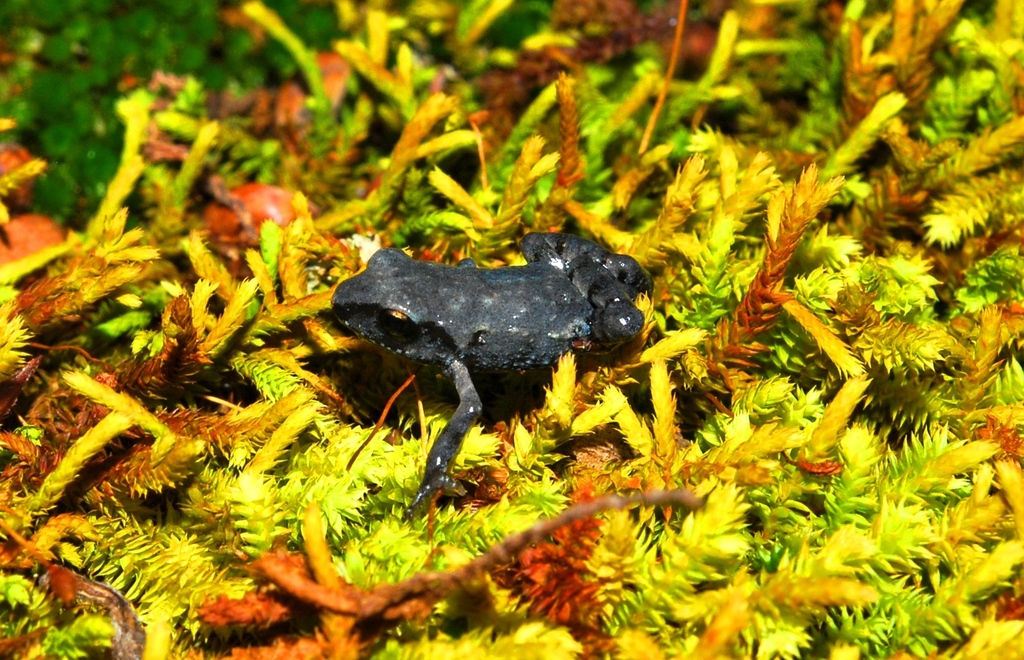
Patzcuaro Peeping Frog
Eleutherodactylus angustidigitorum
Eleutherodactylus angustidigitorum is a species of frog in the family Eleutherodactylidae. It is endemic to Mexico and is known from Michoacán and southern Jalisco (Tuxpan). Common names Patzcuaro peeping frog and Patzcuaro stream frog have been coined for it.
From the article Eleutherodactylus angustidigitorum on Wikipedia (CC BY-SA), quoted section by section
Description
Eleutherodactylus angustidigitorum are small frogs with a maximum size of about 25 mm (1.0 in) snout–vent length. The head is slightly narrower than the body and the snout is pointed. The canthus rostralis is distinct while the tympanum is small and indistinct. The digits have tapering tips; no webbing is present. Skin is smooth above apart from a few flattened and relatively indistinct pustules; the flanks and the venter are covered by large granules. Dorsal coloration is variable and may be nearly uniformly gray-black, reddish-brown with indistinct darker flecks and spots, deep brown, or brownish-gray with black spots.
Range & habitat
Eleutherodactylus angustidigitorum occurs in pine-oak forests at elevations of about 1,500 m (4,900 ft) above sea level; the record from Jalisco is from 2,450 m (8,040 ft). It is a terrestrial frog typically found under stones and on the ground. Development is direct, that is, there is no free-living larval stage. This species is threatened by habitat loss caused by logging and infrastructure development. It might occur in the Pico de Tancítaro National Park.
== References ==
Wikipedia: “Habitat and conservation”
Listen
Looking for field recordings…
Where it lives
Recorded sightings
—
geo-referenced records in GBIF, from museums, herbaria and field observers.
Drag the globe to turn it. Dots are where records exist, not a range map; darker means more records.
In the stacks
This page is assembled live from iNaturalist, GBIF, Wikipedia, the Source Library and the Internet Archive. It is not yet part of the hand-edited codex. iNaturalist taxon 22781.