- Animals
- ›Chordates
- ›Vertebrates
- ›Amphibians
- ›Frogs and Toads
- ›Australian Ground Frogs
- ›Foam-nesting Ground Frogs
- ›Neobatrachus
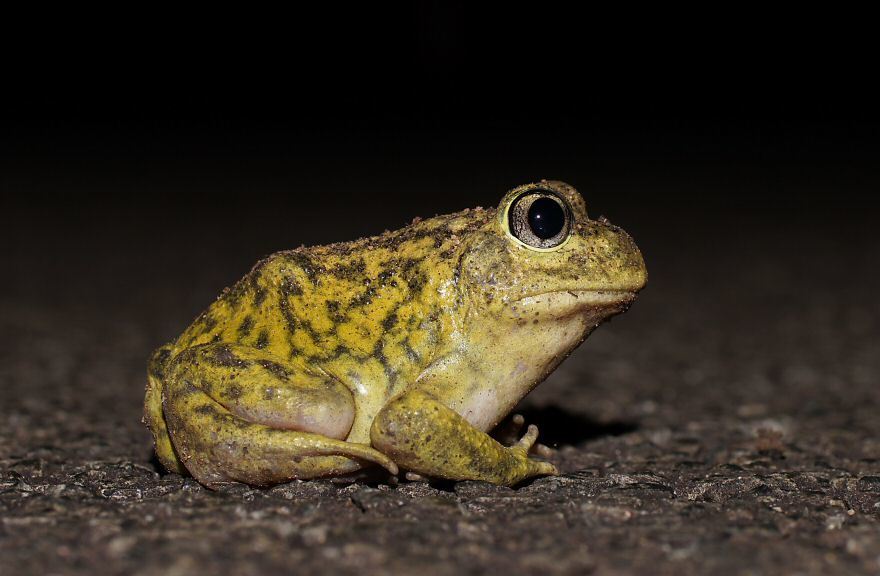
Painted Trilling Frog
Neobatrachus pictus
The painted burrowing frog (Neobatrachus pictus) is a species of burrowing frog native to western Victoria, eastern South Australia and southern New South Wales. They are also one of six species of frog which inhabit Kangaroo Island.
From the article Painted burrowing frog on Wikipedia (CC BY-SA), quoted section by section
Description
The painted burrowing frog is a moderate sized plump frog, reaching 55 mm in length. It is grey to yellow above with brown, olive or green patches. There is sometimes a thin, paler stripe running down the back. The belly is white. The rear toes are partially webbed and the metatarsal tubercles (shovel like structures on the heel of the foot to assist with burrowing) are completely black. The pupil is a vertical slit when contracted, and the iris is silver to gold.
What it does
Painted burrowing frogs inhabit waterholes, dams or pools of watercourses in woodland, grassland, and cleared areas. Males make an elongated trilling sound while floating in water after heavy rains, mainly in winter and autumn. Like other Neobatrachus the species is an adapted burrower and will often spend periods of time underground to avoid drought conditions. Eggs are laid as loosely adherent clumps which may break apart. Tadpoles are large and reach about 78 mm (at about stage 35). Development takes about 4 to 7 months and metamorphs are often observed from September to November. When threatened, this species will sometimes rear up all its legs, inflating its body to appear larger to discourage some predators. It is an uncommon species being threatened with habitat loss and is classified as endangered in New South Wales.
Wikipedia: “Ecology and behaviour”
Listen
Looking for field recordings…
Where it lives
Recorded sightings
—
geo-referenced records in GBIF, from museums, herbaria and field observers.
Drag the globe to turn it. Dots are where records exist, not a range map; darker means more records.
In the stacks
Searching the stacks…
Every page naming Neobatrachus pictus in the Biodiversity Heritage Library →
This page is assembled live from iNaturalist, GBIF, Wikipedia, the Source Library and the Internet Archive. It is not yet part of the hand-edited codex. iNaturalist taxon 22075.